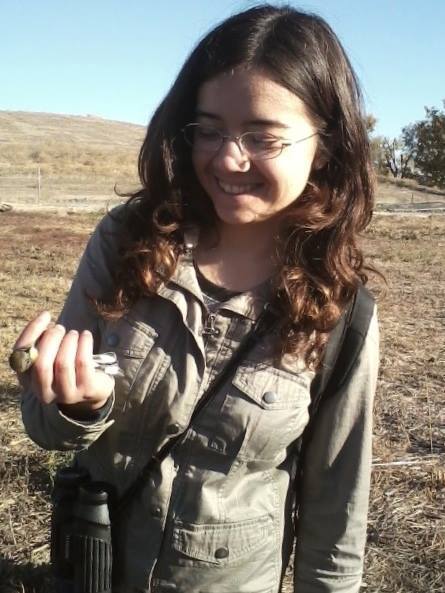
My first experience mist-netting birds was in the fall of 2013 (6 years ago already?!) when I was an undergraduate student in an ornithology course at UC Davis. In one of our field trips, we learned how to set up nets and were lucky to catch some birds. I’ll always remember holding my first one, a Yellow-rumped Warbler (photo right). Since then, I’ve been fortunate to be a part of more mist-netting events, participating in museum bird surveying and collection trips, teaching students in field methods courses, and observing nighttime netting for little owls. Now as a teaching assistant for the ornithology lab course at the University of Manitoba, I’m very happy being in the position to help teach other undergraduate students about this awesome and fun technique used in wildlife research!
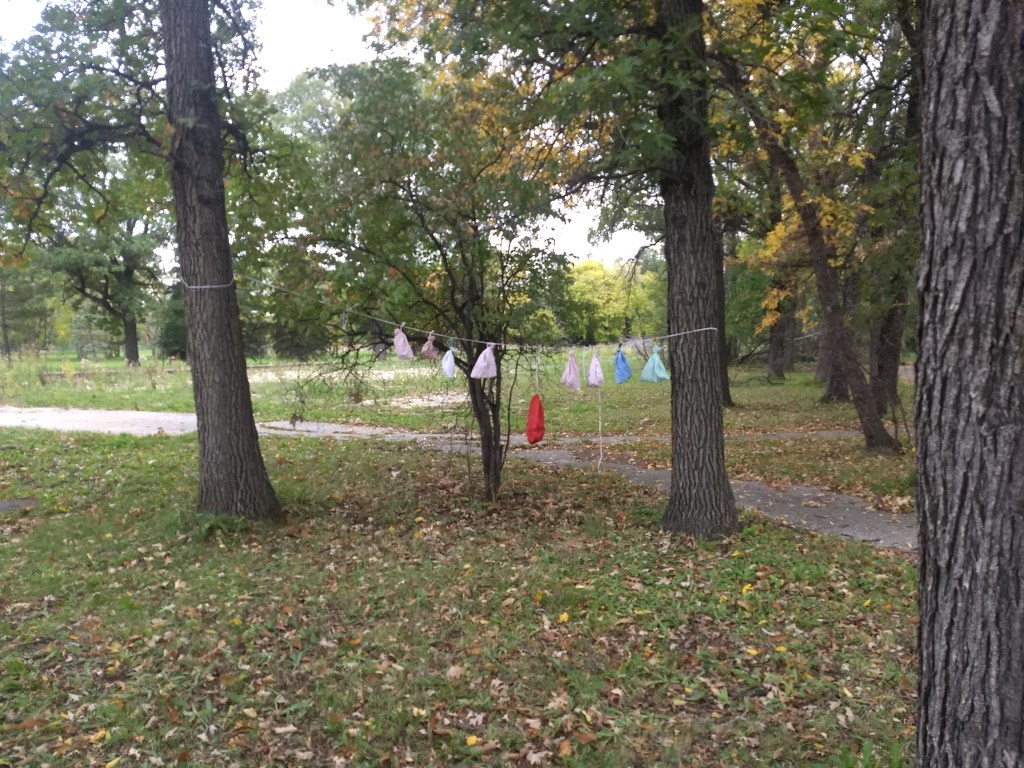
Mist-netting is a method avian biologists use to capture wild birds for their research or educational purposes. These nets are set up with a pair of long poles, stretched out with several horizontal net folds or “pockets” that birds fall into after they collide into the net. A well-placed net is invisible at first glance, so birds passing through or lured in with a callback won’t see what’s coming! An example of a net set-up is shown below, where the photo on the right reveals the net location.
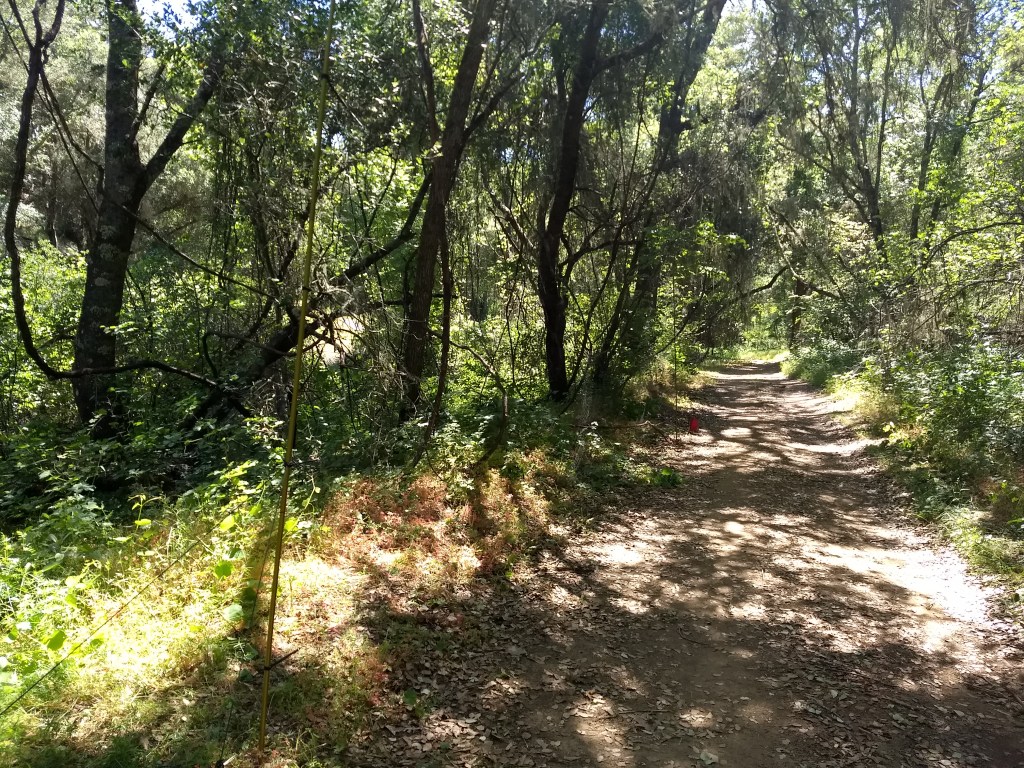
Mist net – can you see it? 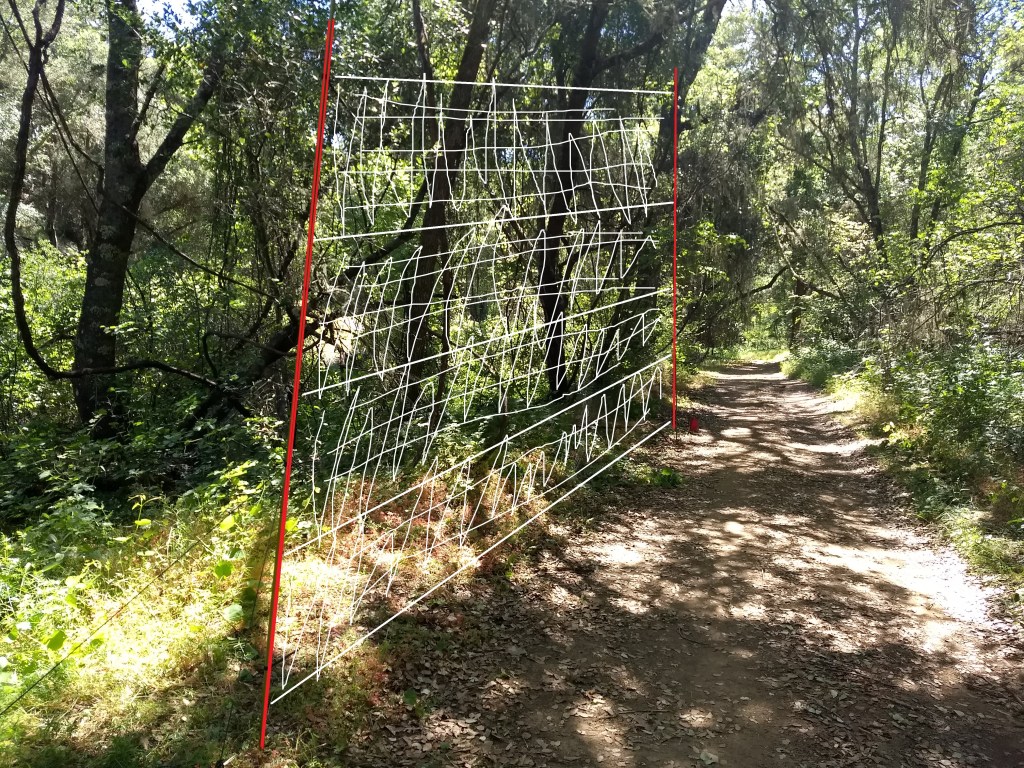
Mist net highlighted
The birds’ safety is always priority, so these nets need to be checked regularly (~15-20min intervals) to ensure that none of them are stuck in the net for too long, since they are then vulnerable to stress, hot or cold temperatures, and predators. Mist-netting on windy and rainy days should be avoided, since that can be dangerous for any captured birds (and also not much bird activity). The mist nets I’m familiar with are designed for songbirds but also used for other small(ish) birds, such whip-poor-wills and saw-whet owls. There are likely other types of nets for different types of birds, such as hummingbirds, ducks, and other raptors. When a bird gets entangled, they need to be carefully removed by an experienced bird bander (or supervised by one) to minimize stress and avoid any damage or injuries to the bird.
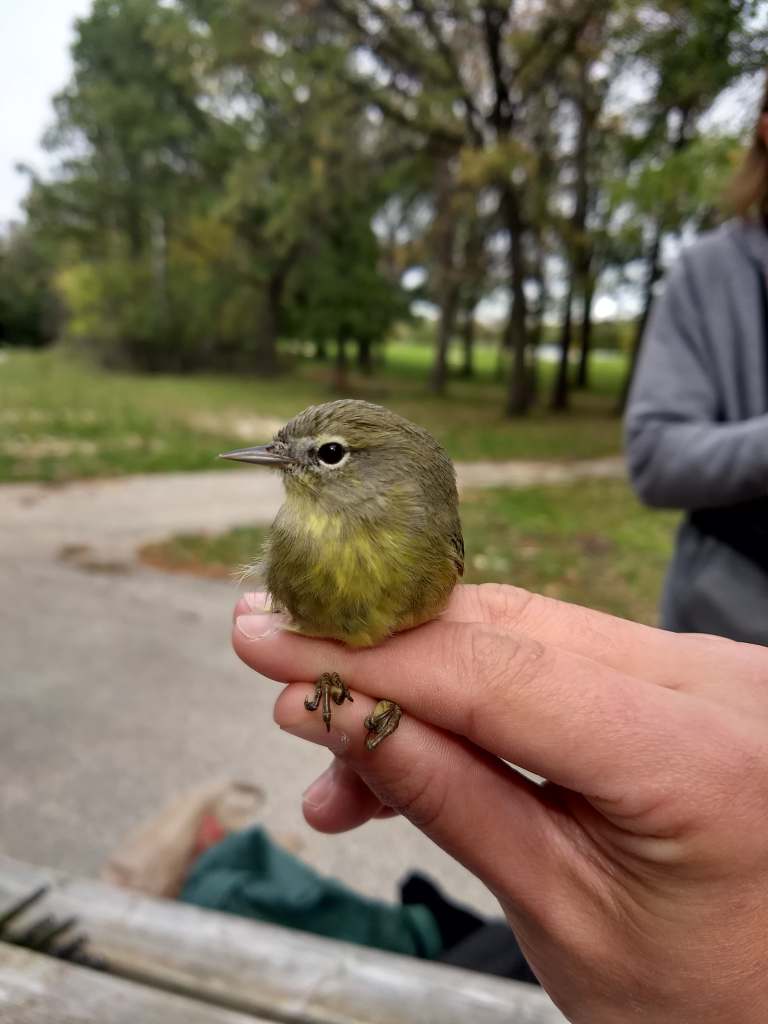
Orange-crowned Warbler 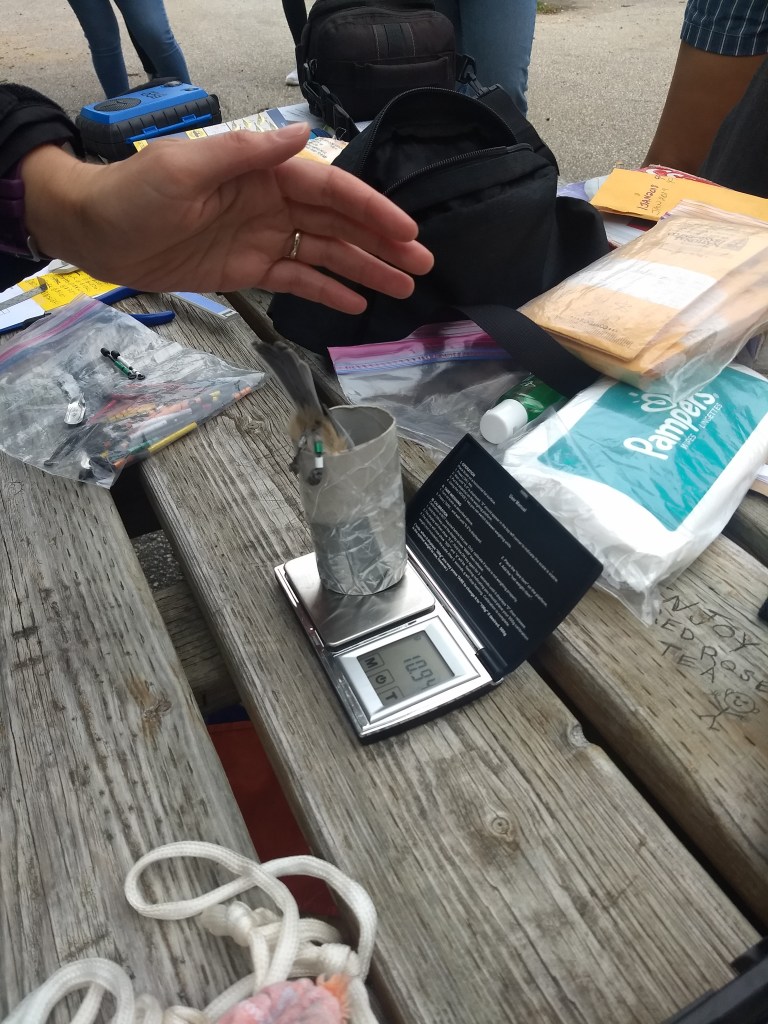
Weighing a Black-capped Chickadee
Capturing wild birds is extremely valuable for assessing species diversity in certain areas and banding & recapturing birds (including targeted species for specific studies). The numbered leg bands placed on the birds act as ID tags, so when a banded bird is later recaptured this can tell researchers a lot about their dispersal and life histories. Coloured bands are also used in some cases, which helps observers identify the individual through re-sighting without having the bird in hand. Another procedure, or step, done with captured birds is taking measurements such as wing chords, fat scores, and weights. These morphometrics can inform us of birds’ body conditions and in certain cases can also help with identification between difficult species, sexing, and aging.
In the last two bird labs in the past couple weeks, I worked alongside my advisor Dr. Kevin Fraser, Dr. Emily McKinnon, and labmate Saeedeh Bani Assadi, to show students the methods and applications of mist-netting. In total, we captured about 30 birds, including a variety of warblers, thrushes, chickadees, woodpeckers, nuthatches, and sparrows!
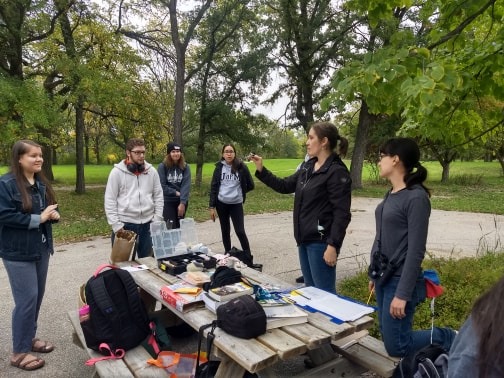
Emily holding a Black-capped Chickadee 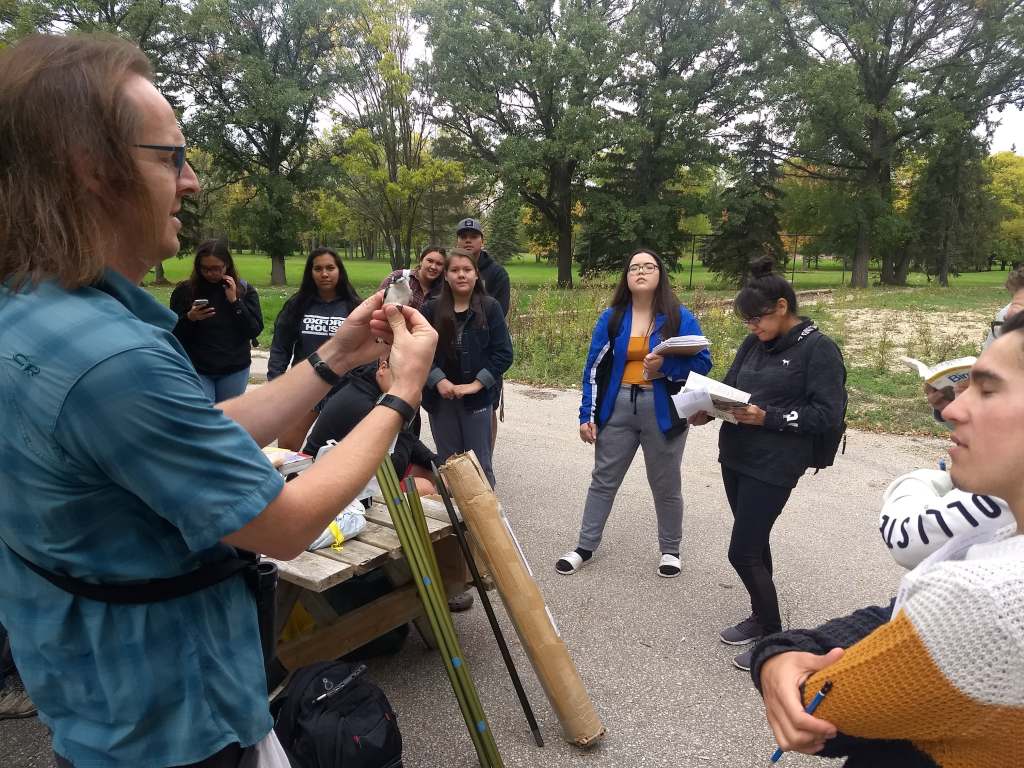
Kevin holding a White-breasted Nuthatch
I think it’s really wonderful that we’re able to show students how birds look up close, and proper techniques on how to handle them. It’s a rare opportunity for many folks, and it may be a significant point in some students’ interest to pursue research in ornithology (like it was for me in 2013!). I find one of the most exciting parts of mist-netting is discovering what bird species the net has captured, and targeting birds that would otherwise be extremely difficult to see. I’ll end this post with a couple photos of a Northern Saw-whet Owl (one being weighed in a pringles can), that was captured in a mist-net last fall. This was one of my favorite nights, where I joined owl bander Kim Wetten for her netting adventure and saw (and held!) a little owl up close. My excitement was so high that I couldn’t sleep for the rest of the night even after I came back home at 2am.
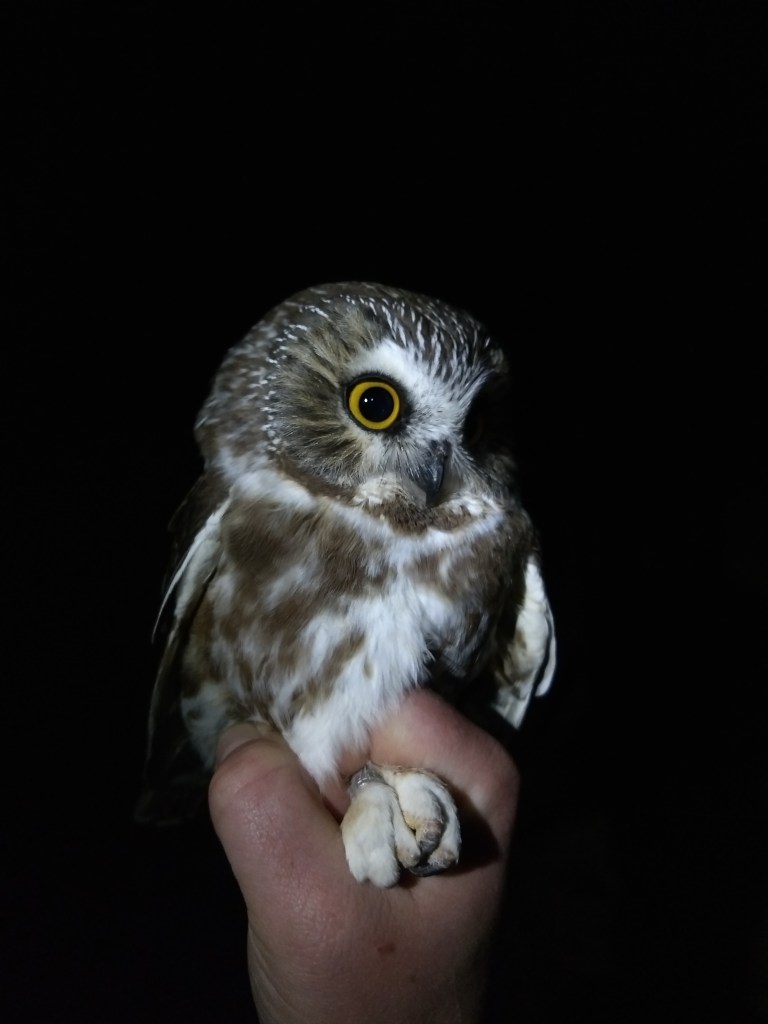
Northern Saw-whet Owl 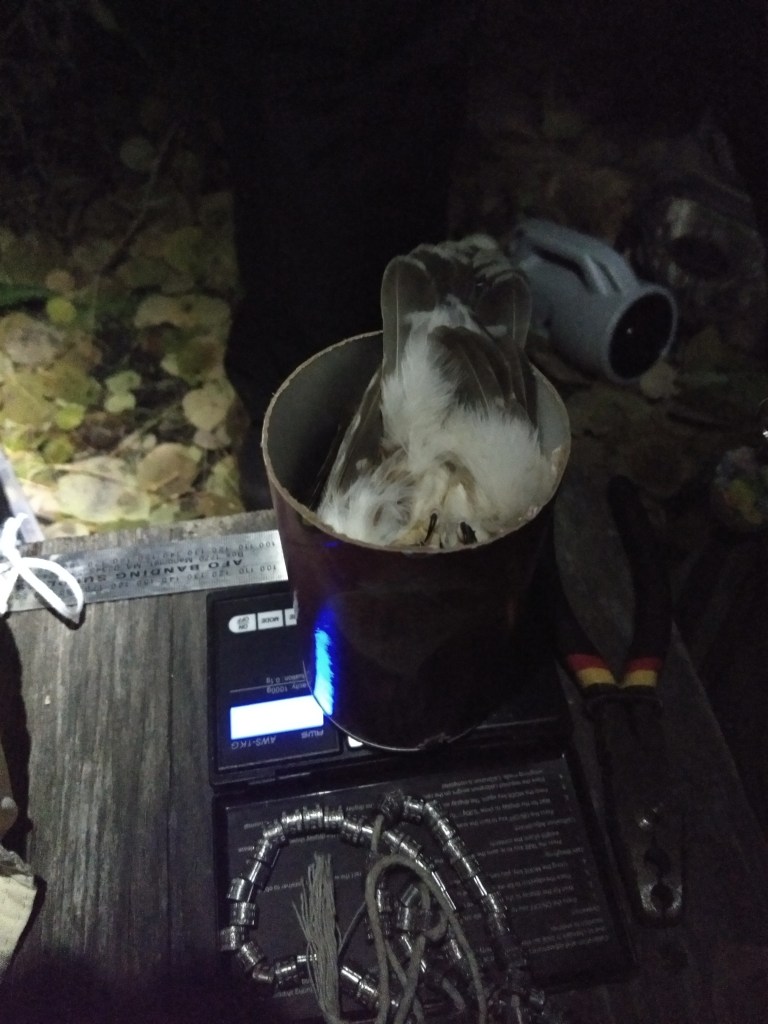
Weighing a saw-whet owl
-Evelien
 eveliendegreef.com
Evelien,
Thanks for the mist netting blog post. Good job on the Saw Whets and good decision to save it for last. Your blog posts are engaging, informative, enjoyable and I look forward to them.
As always I tried to comment and was rejected. Heck of it is, I FOUND my WordPress password, great excitement, but, alas, it no longer applies. Not to save nares or nates am I able to make peace with WordPress.
My pal Bill Hohenstein (I really want you to meet him, directs climate study for USDA, deGreef-level photographer) just filmed Hudsonian Godwit at Bombay Hook NWR and I’m putting together that profile for FeatherFlix. While he was filming the HUGO, a Peregrine flashed in and chased the HUGO around the impoundment for 10 sec. Thousands of shorebirds clustered in those shallows and the PEFA picks on one of 3 Hudsonian Godwits in the Mid-Atlantic. I’m trying to make the clip of that event this morning. Only about 3 sec of footage.
I hope you got your turnips planted and I hope you’re not in the same bliz as Montana.
Avante, amica,
Michael
On Sat, Sep 28, 2019 at 12:29 AM Evelien de Greef wrote:
> eveliendegreef posted: ” My first experience mist-netting birds was in the > fall of 2013 (6 years ago already?!) when I was an undergraduate student in > an ornithology course at UC Davis. In one of our field trips, we learned > how to set up nets and were lucky to catch some bir” >
LikeLike