I love working in the field, observing and working with the animals, witnessing captivating behaviours, and learning about their life histories first-hand. In the last few months, I have had a lot of fun being part of the field crew in the Avian Behaviour & Conservation (ABC) lab at the University of Manitoba, working with my advisor Dr. Kevin Fraser, and my labmates Saeedeh Bani Assadi and Christie Lavallee. Although my MSc project is focused on genetic work using birds from prior years and different locations, timing with sequencing and genomic data worked out where I could join the outdoors for the Purple Martin breeding season in Manitoba. I plan to write a post in the future about my genetic work, but for now I will start with talking about the field with Purple Martins.
Colonies of Purple Martins work up storms of warbling chirps, chatters, and clicks. It’s incredible to be among large groups of birds actively socializing, building nests, feeding chicks, and mobbing predators. Here in Manitoba, our field team monitors multiple colonies, graciously hosted by private and public landowners. We’re in the northern portion of this species’ breeding range where we have a shorter breeding season compared to their relatives further south, such as in Florida. These birds need to raise their young very quickly to be ready in time for their migration back to South America. In the ABC lab, we have been regularly monitoring Purple Martin nest boxes during the months of May-July.
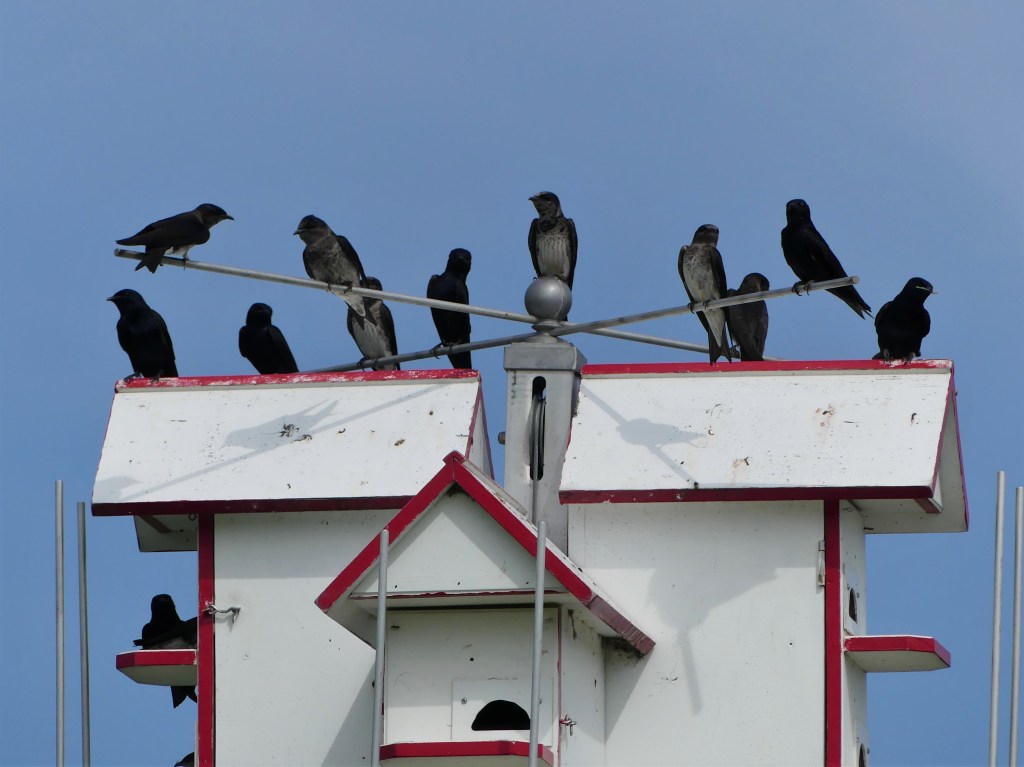
Purple Martins on their birdhouse
Purple Martins are secondary cavity nesting birds, relying on pre-made holes or boxes to raise their young. Birds such as Tree Swallows, Western Bluebirds, and Wood Ducks also fall in this category. Many birds can use holes carved out by woodpeckers, but Purple Martins, particularly the eastern subspecies, have grown to heavily rely on human-made nesting structures for their survival. The amazing apartment-like nesting structures can provide numerous cavities, coming in difference styles such as gourds, houses, or both! After cranking a house down, we can easily check all the cavities. We open one side at a time, where there is a tray for each nest compartment that provides the base for the nest. Once we’re done with our check, we simply crank the house back up and the martins immediately return.
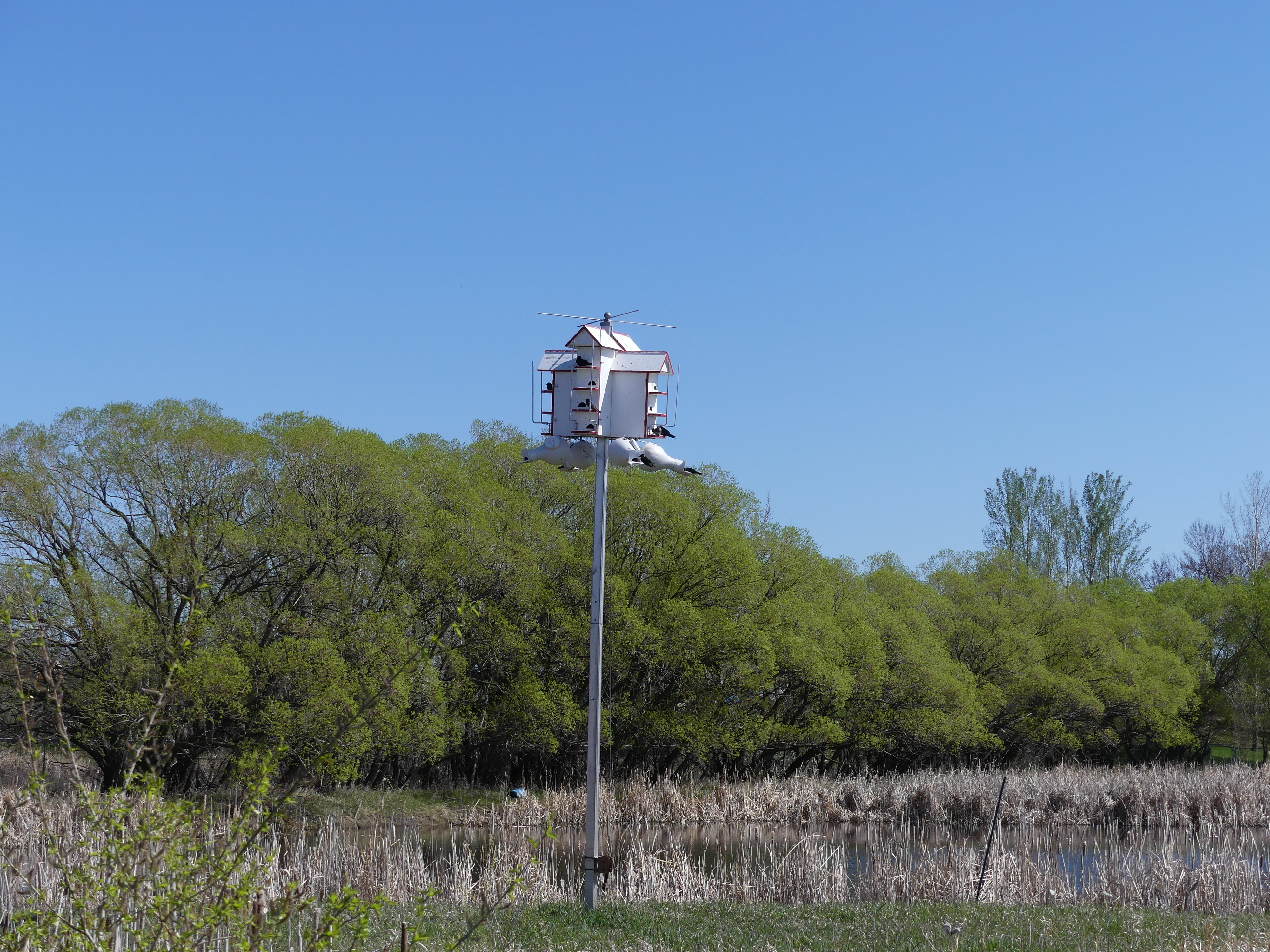
Purple Martin birdhouse 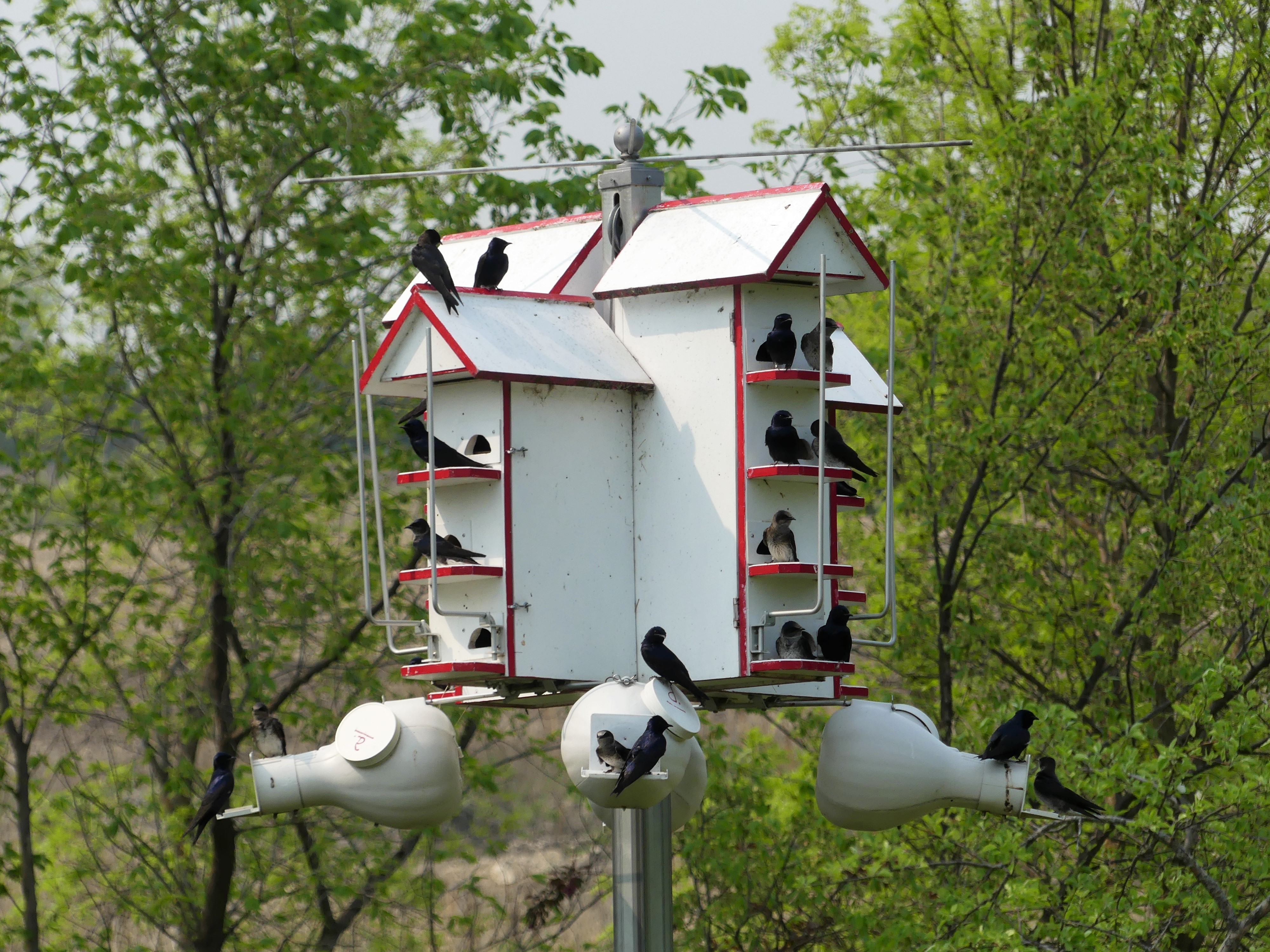
Purple Martins perched at their cavities
In the early stages, the Purple Martins will build nests with grass and mud, and when they’re getting ready to lay eggs they will add a lovely arrangement of green leaves. Through regular nest checks, we obtain lots of valuable data that informs us about their breeding activities. Observing first egg dates is a common way to measure timing of breeding activity, since it is a clear way to determine the official beginning of a nest. The female will lay one egg a day until the clutch is complete, and then start incubation (incubation lasting about 15-16 days). Like other songbirds, Purple Martins have altricial young, where the babies are born naked, blind, and helpless, as opposed to precocial young, such as in ducks and chickens where the young are immediately able to move and feed themselves. Both parents will feed their young, up to 7 hungry mouths in a single nest! For this season, we weigh nestlings at certain stages of their growth, and then when they reach ~20 days of age we band them with federal numbered bands (a bracelet around their leg with an ID number) and place a tracking backpack on their backs (more on tracking tags further down).
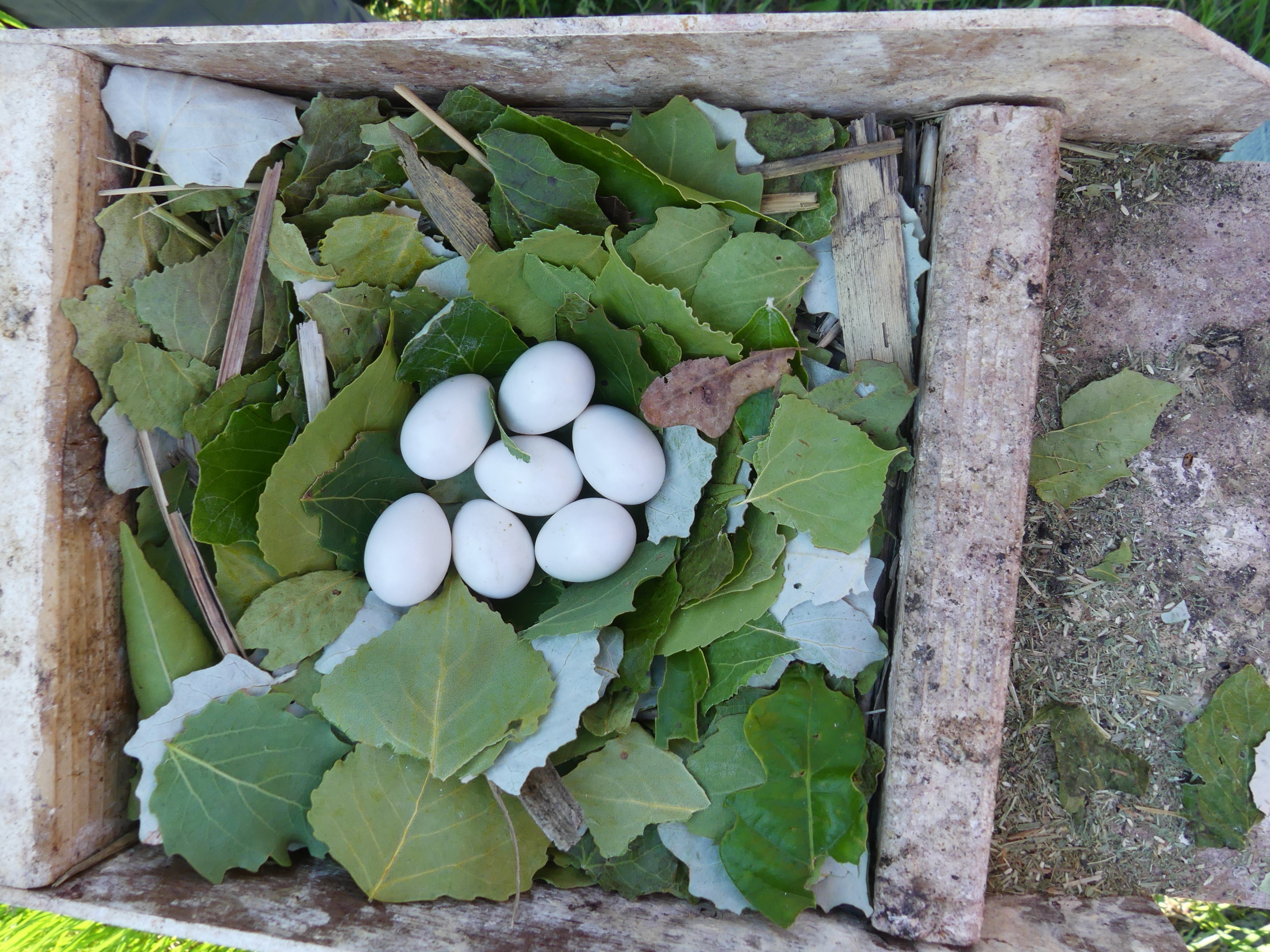
nest with eggs 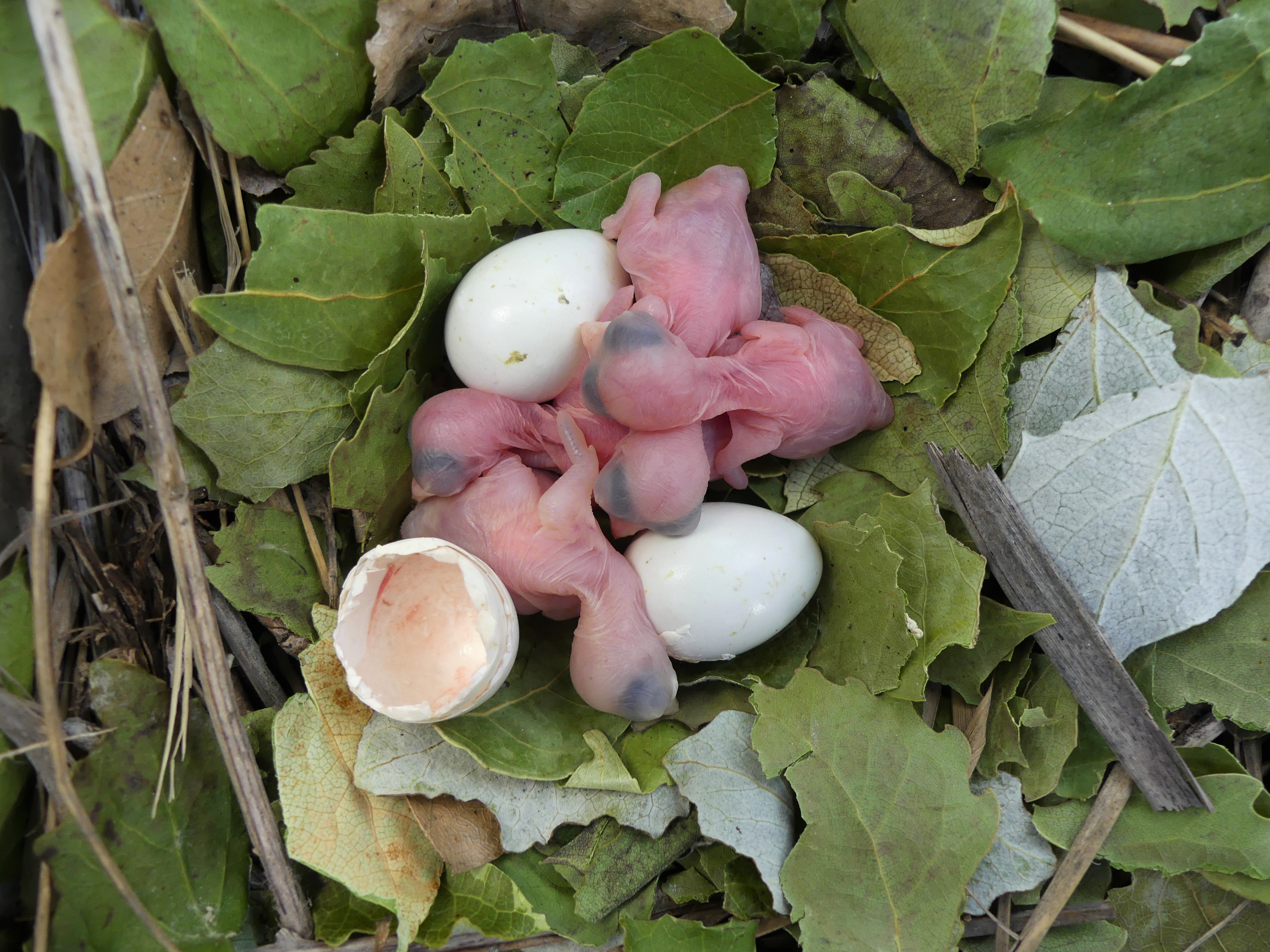
hatching nest 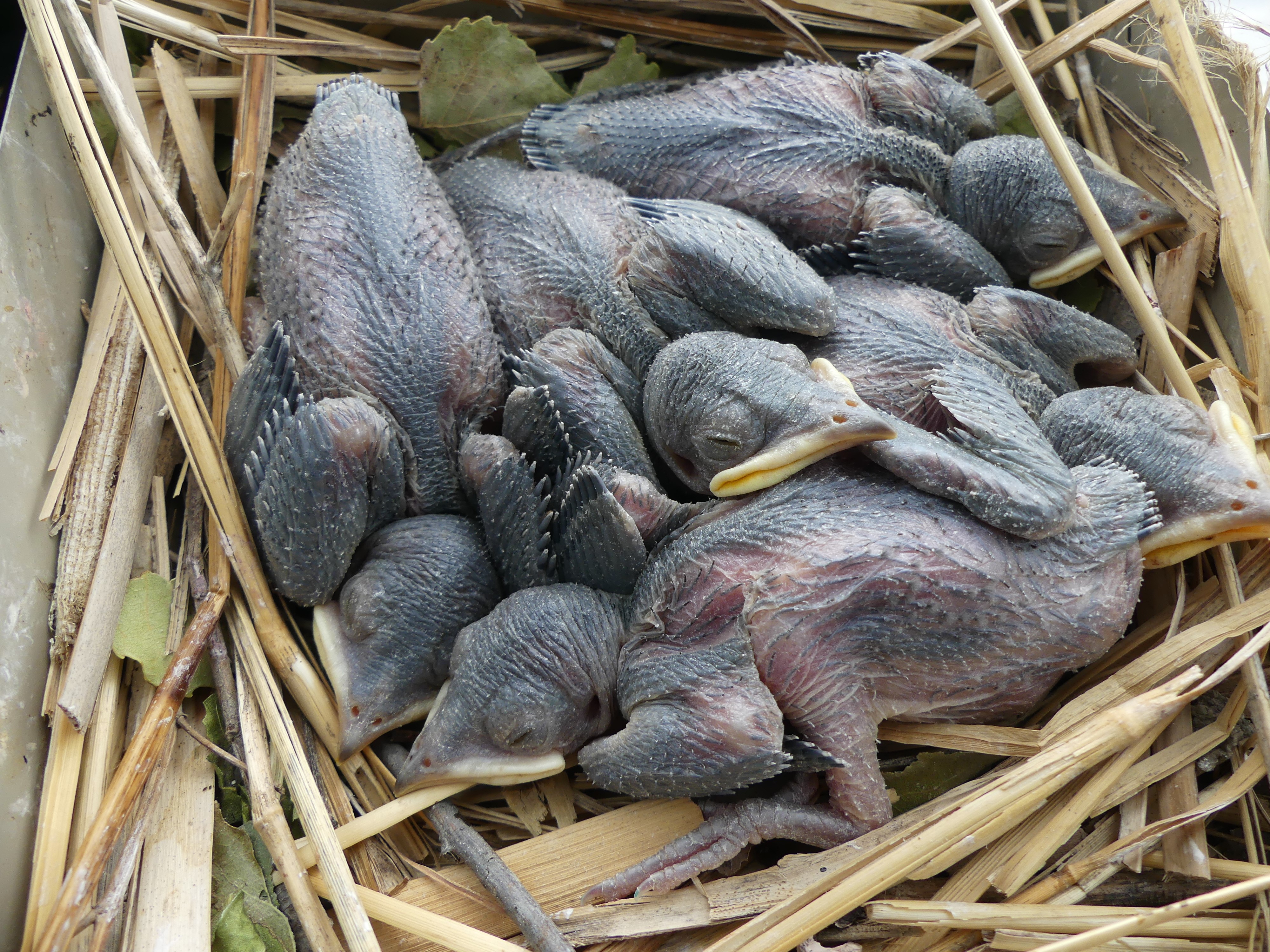
10 day old chicks 
14 days old 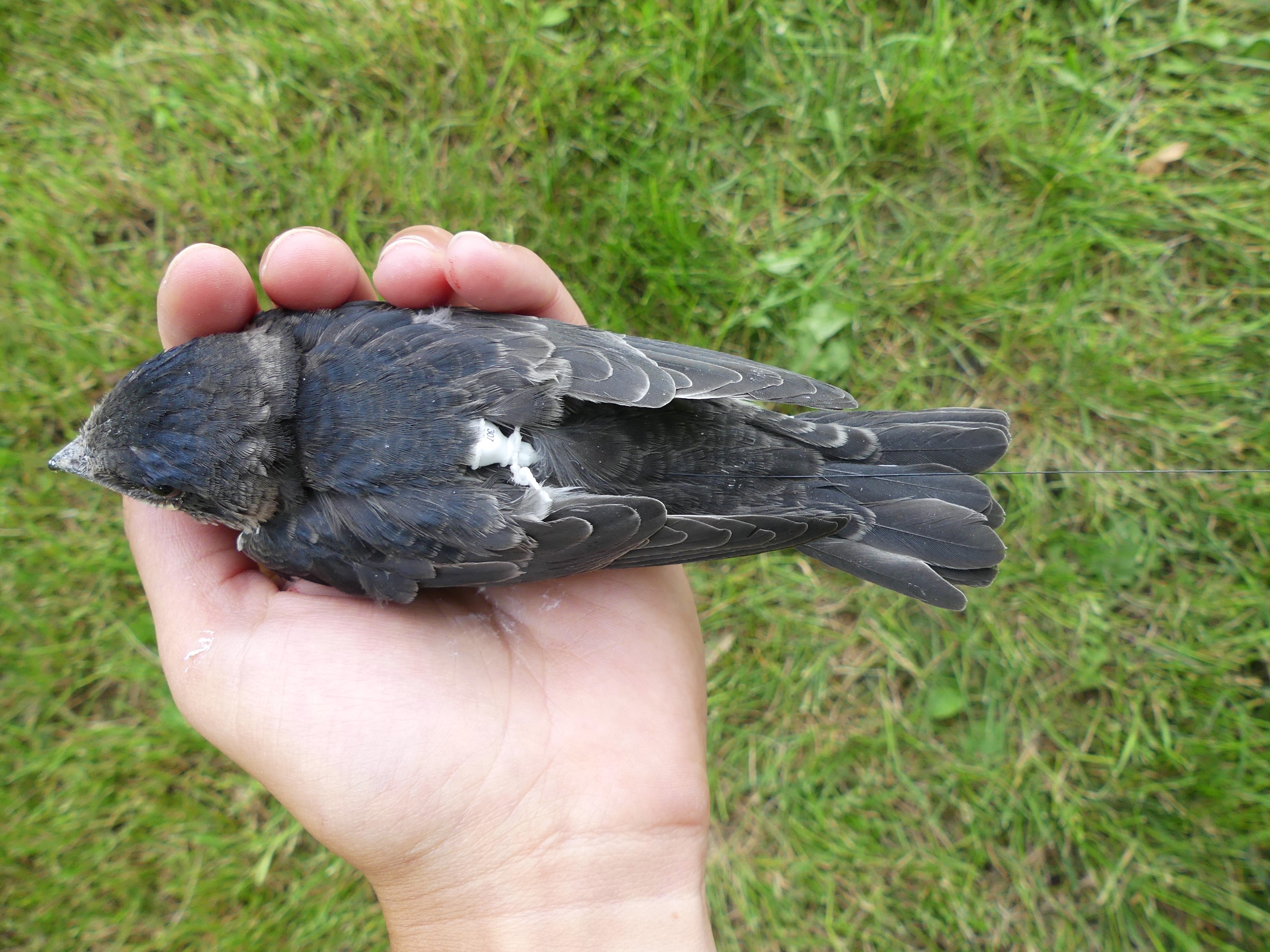
20 days old, with Motus Tag
Nestlings are easy to reach, since they remain in their nest until they are about 26 or so days old. Capturing adults, however, requires a different tactic. We wait until their eggs have hatched, and then we start to trap them inside their respective cavity as they go inside to feed their chicks. The younger the chicks are, the more frequently the parents will have to go in (best time to catch them!).
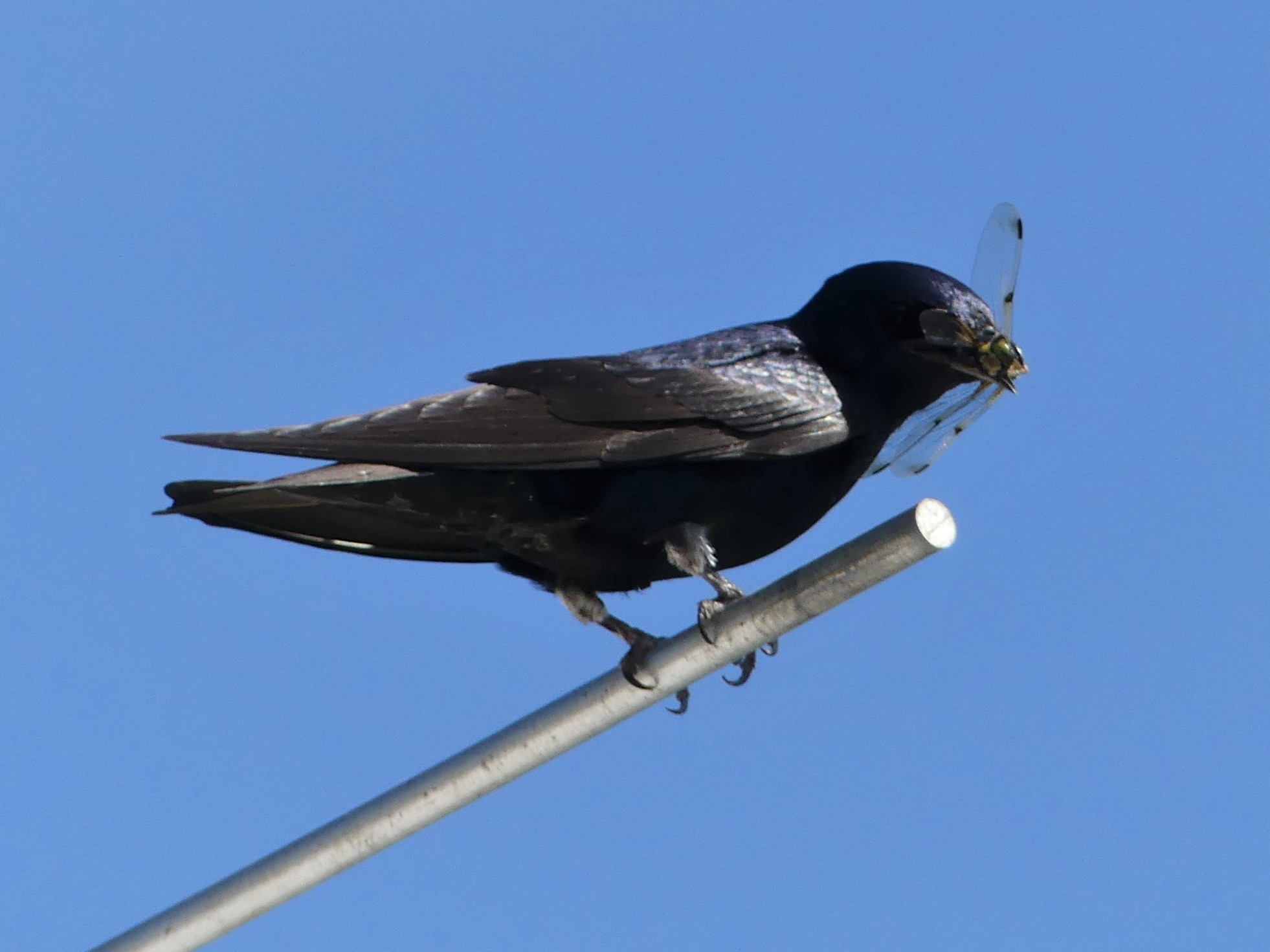
dragonfly 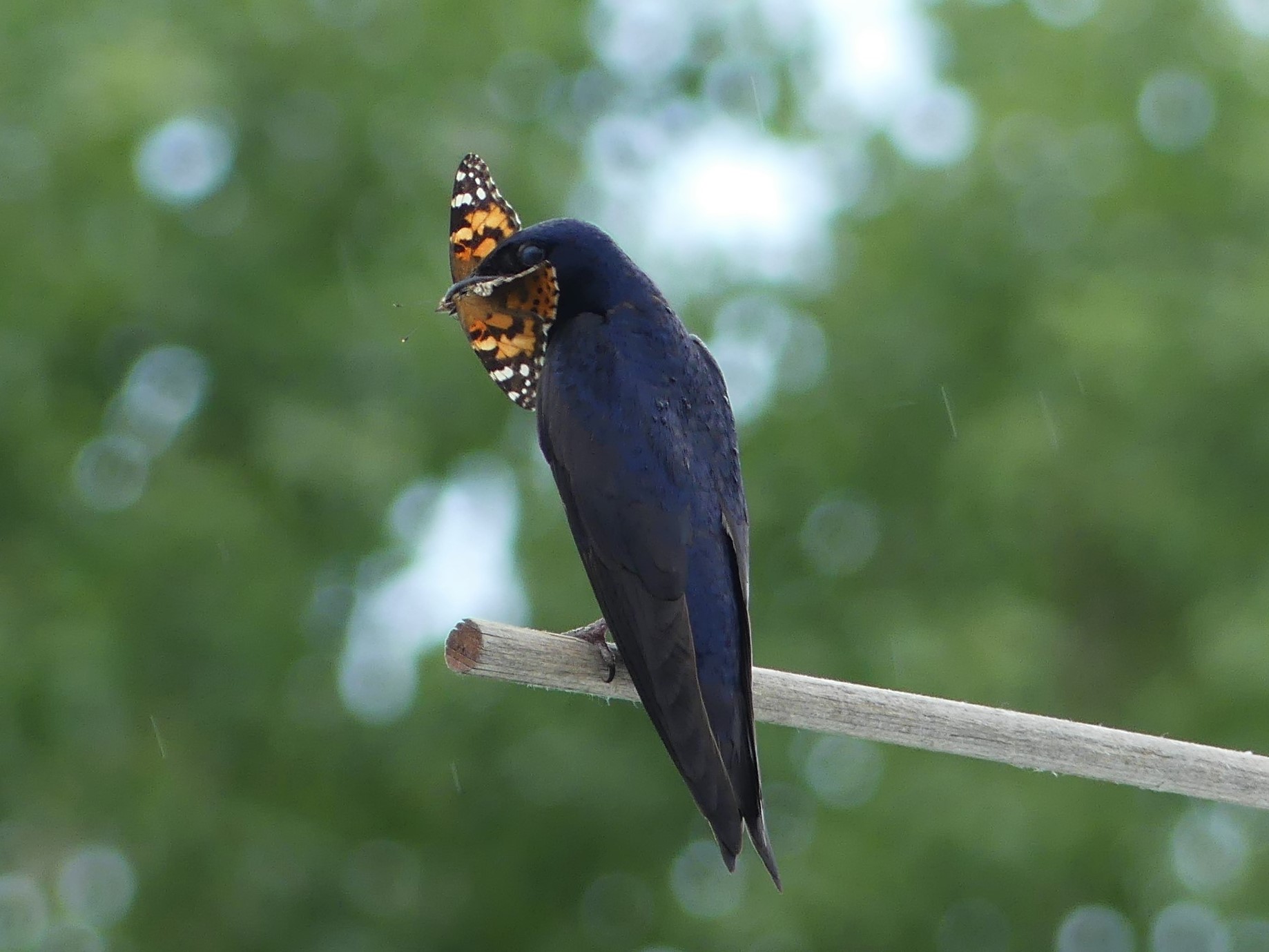
butterfly 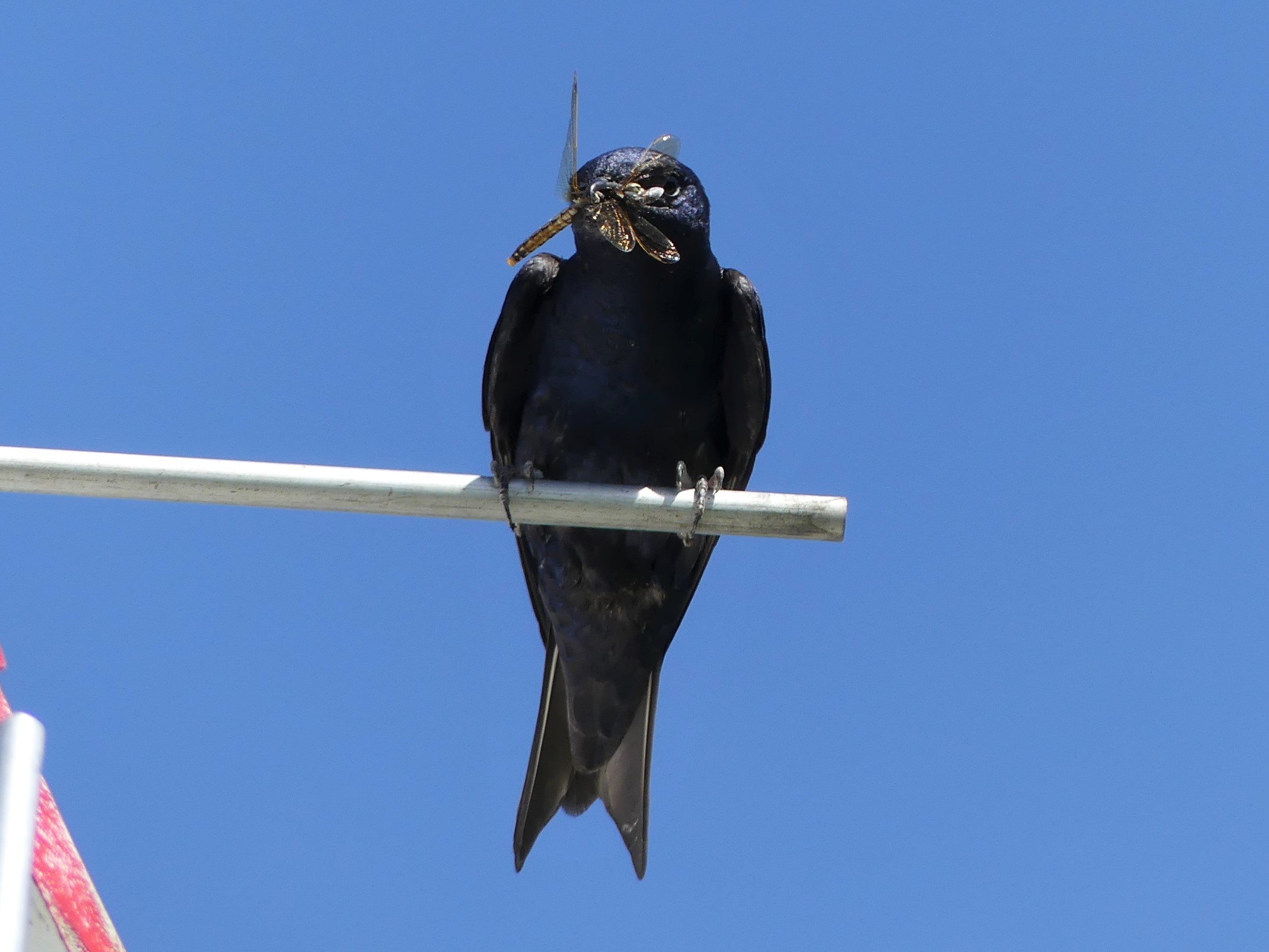
dragonfly
There are two methods we use for capturing adults. One is simply using an extendable pole with a sock at the end to block the cavity entrance right after the bird goes inside. This works really well sometimes, but can be challenging if the bird is very vigilant and quick. Another way to catch them is by temporarily placing trap doors above their nest entrance. These doors are held open with fishing line, and we hold the line taut until we see the bird fly in and then we let the line go and the door falls down to close the cavity. Most of the birds will go right in, making this system a reliable way to catch them. But there are always a few that are suspicious of the set-up and hesitate. Some birds will even perch on the fishing line, making it appear as if they were levitating in the air!
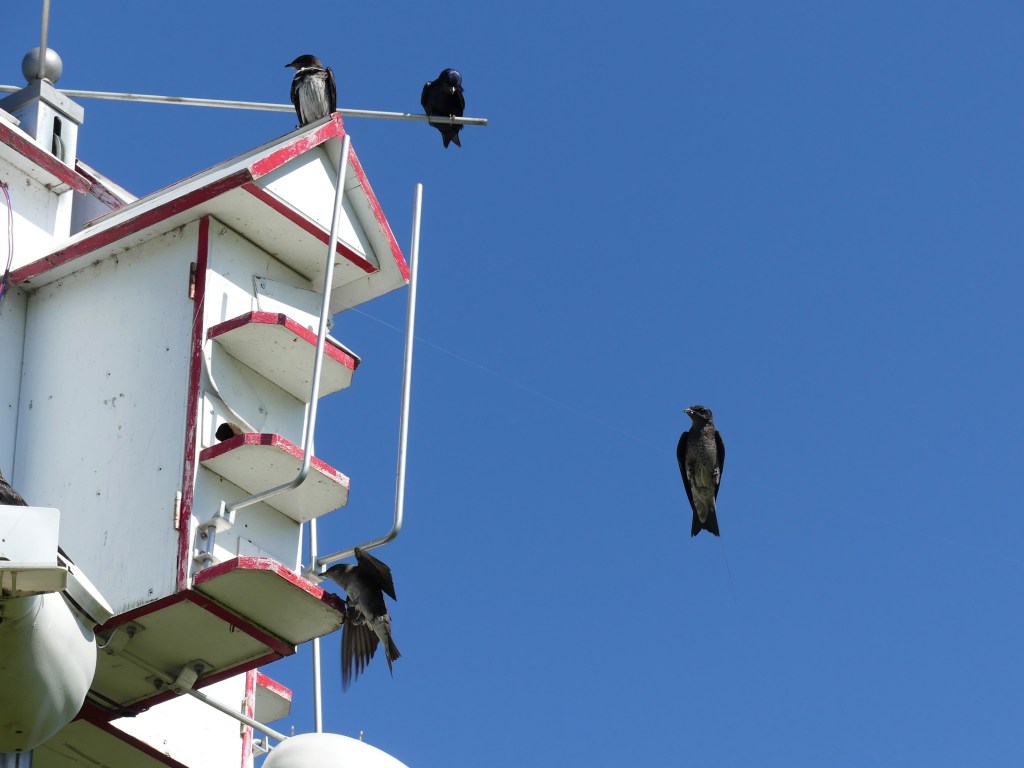
trap doors and bird perched on fishing line 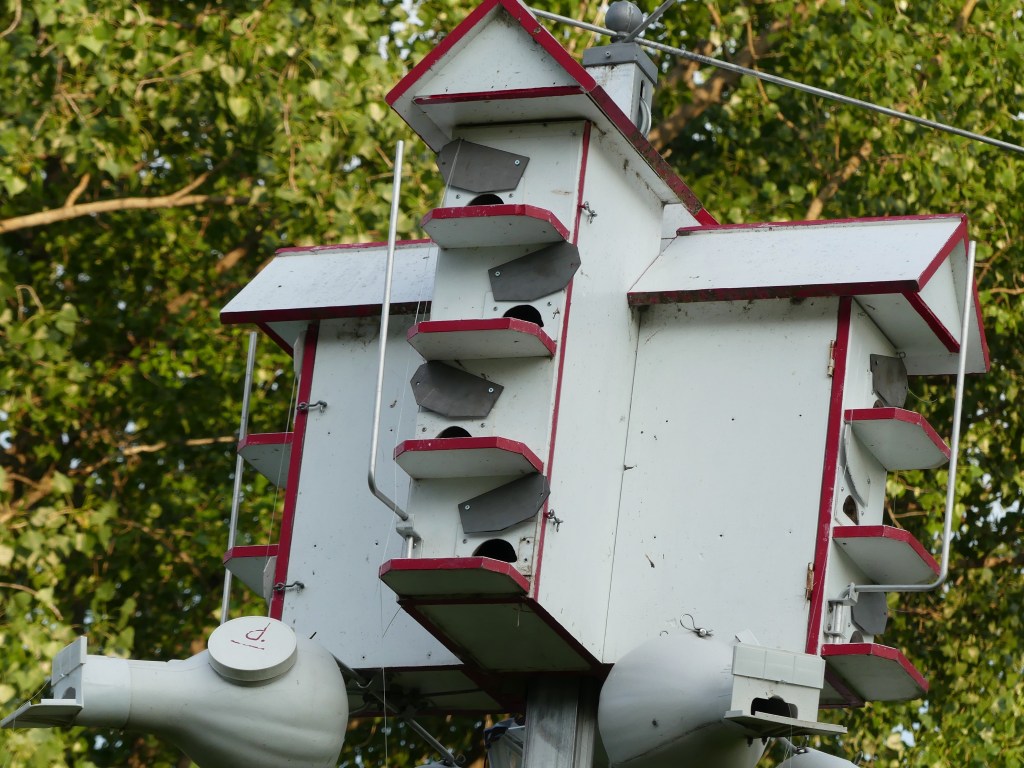
mass trap set-up
One evening we completed a mass trapping event, where we put trap doors on all the cavities for one site (54 cavities total!), with fishing line taped together at the base of the houses. After the birds settled in and the night cover emerged, we sneaked to the houses and snipped the lines so the doors all come down at once. Up until 3am, we had processed adults with GPS and Motus tags, retrieving and deploying more. Afterwards, we placed the birds all back in their respective cavities, carefully removed the trap doors, and left the birds alone for the remainder of the night.
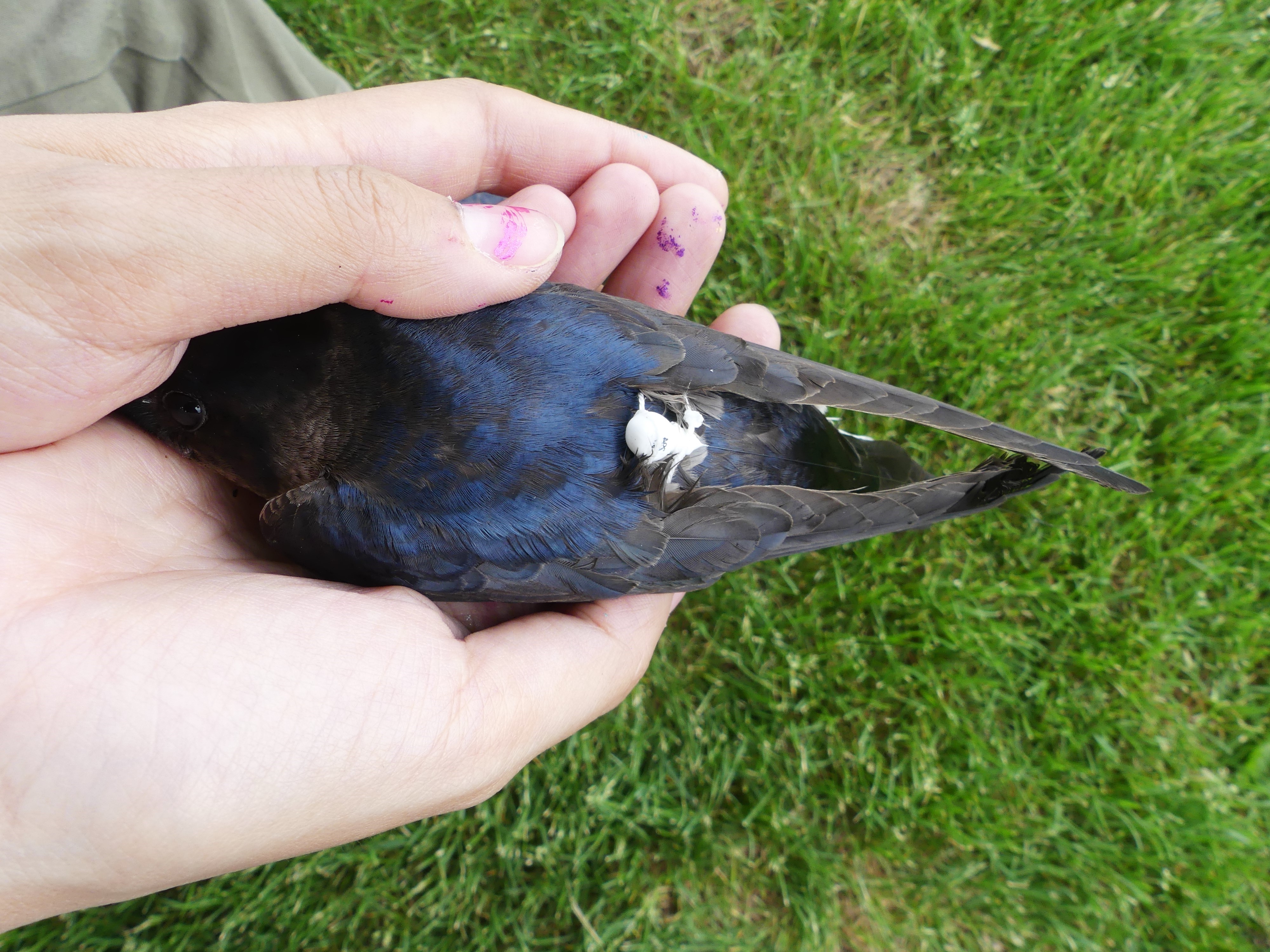
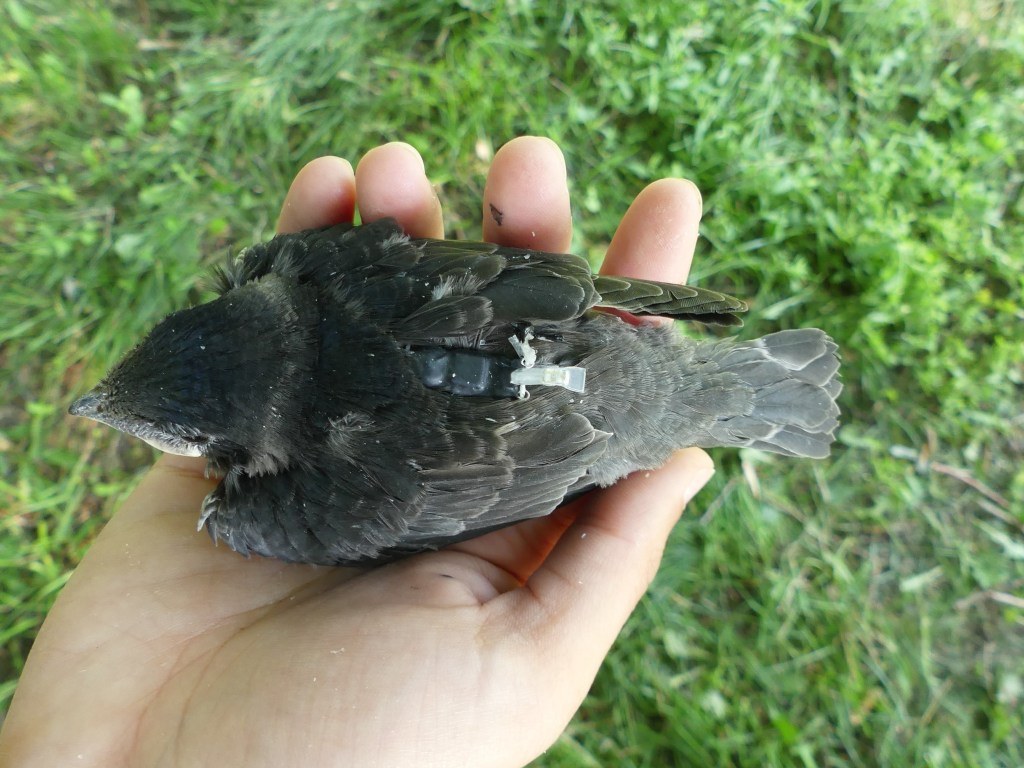
Motus transmitter 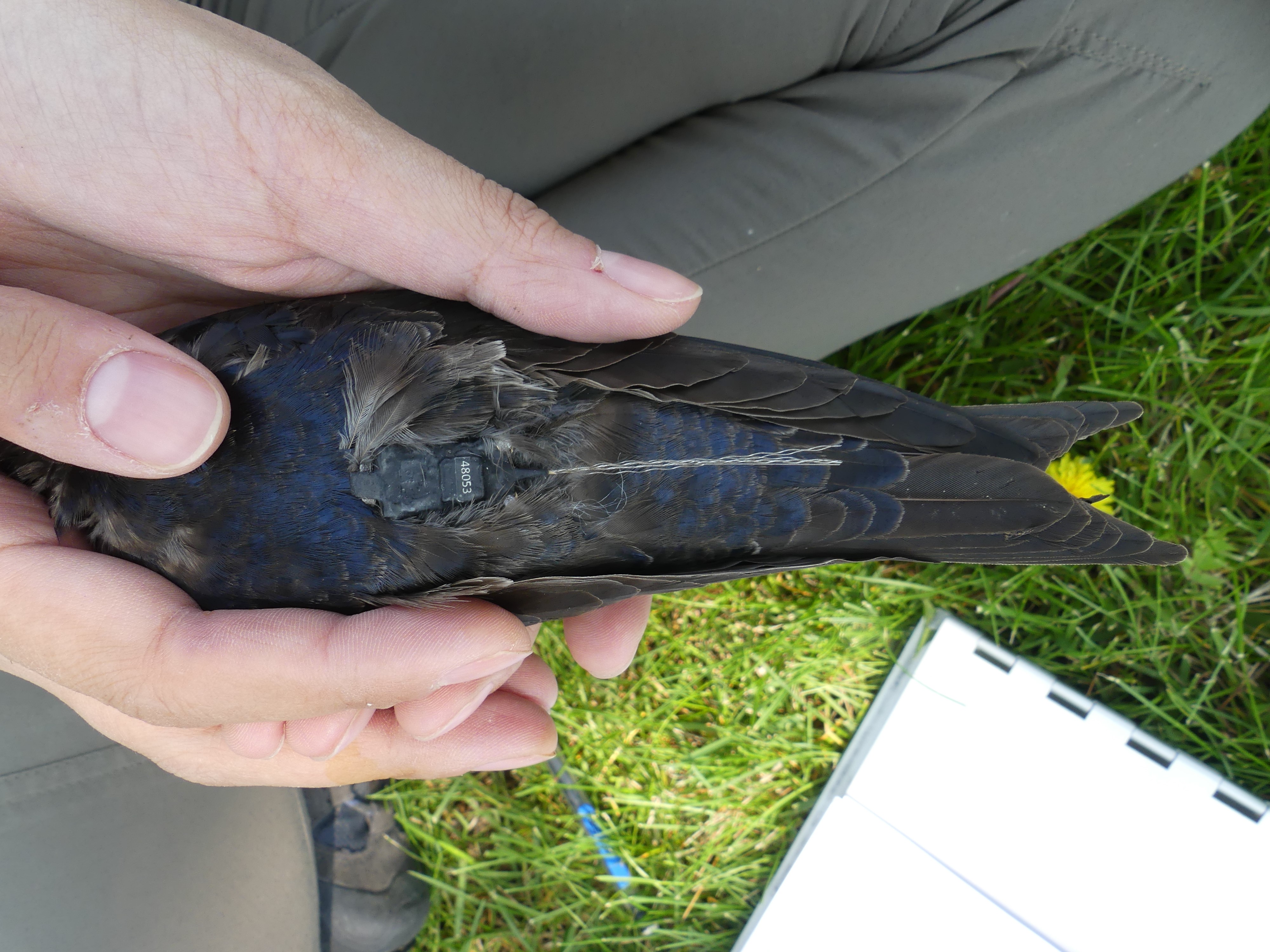
GPS tag
Geolocator 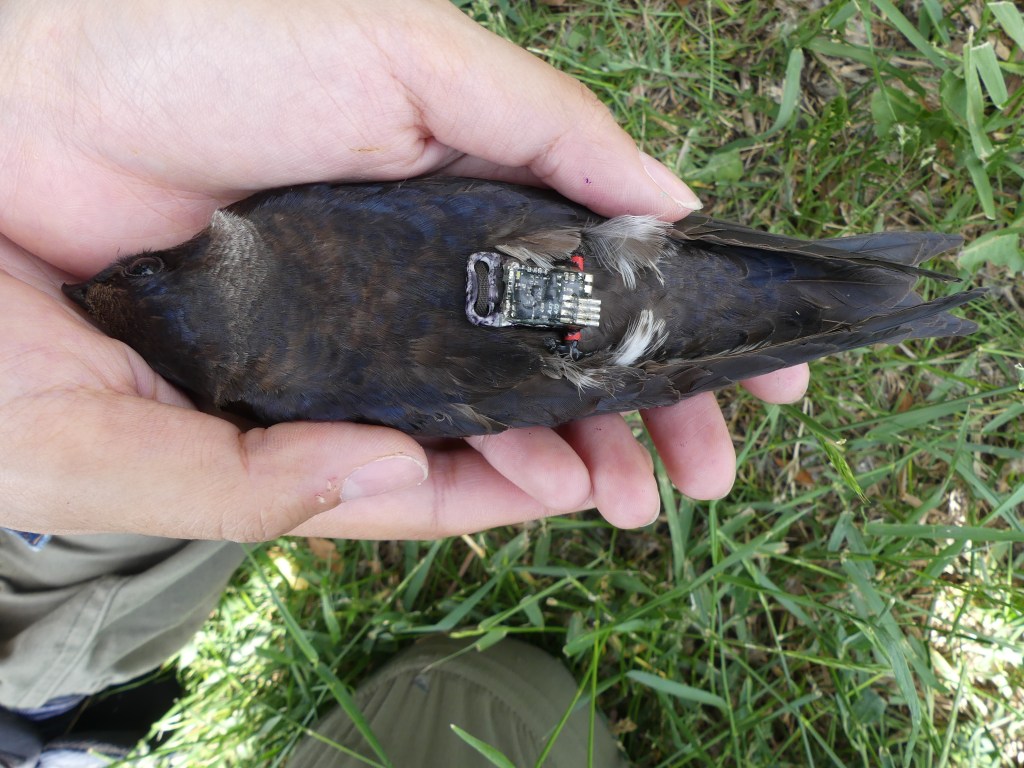
Accelerometer
This season we are using four different type of tags, the Motus transmitters (same ones we put on the nestlings), GPS tags, geolocators, and accelerometers. The Motus tags emit radio signals that are captured by telemetry receiving stations. There are towers/stations around the world that can pick up signals from any bird passing by carrying this tag. The ABC lab has set up 5 Motus signal towers in Manitoba, right at our field sites, to study the timing of fledgling, departure, and activities around their colony. One large benefit of the motus tags is that we don’t have to retrieve the tag to obtain the data! The other three tag types, however, do need to be retrieved. With luck, we see some returning birds with GPS tags and when we obtain the tag back, we have tracks for an entire migratory journey. This is extremely valuable for looking at the timing of their migration and other elements such as habitat choice and day/night decisions while migrating. Light-level geolocators track movements in a different way, where they record light levels, which is used to obtain the timing of twilights for determining locations of the bird. Although it’s less precise than a GPS tag, it can last the entire year and provide a full year track. My MSc study is using data from geolocators, and it is really cool to actually see them first hand and help deploy some! Finally, we are also trying out accelerometers to measures other kinds of movement, examining finer details of flight patterns, speed, and behaviours during the day.
An important aspect of nest monitoring that we have to take into account is being careful when checking nests while there are cavities that have very old nestlings. If we are careless when we disturb the nest, these young may prematurely leave the nest and that could be detrimental to their survival. In order to safely monitor and band other nests on the same house, we plug up the cavities that may contain potential jumpers using pieces of pool noodles attached to some fishing line and hold a piece of cardboard to cover the compartment as we open the side to access the nests. After we’re done with our tasks with the house, we can crank it back up and we wait for a bit for the birds to settle, and then pull on the fishing lines to remove the pool noodle covers.
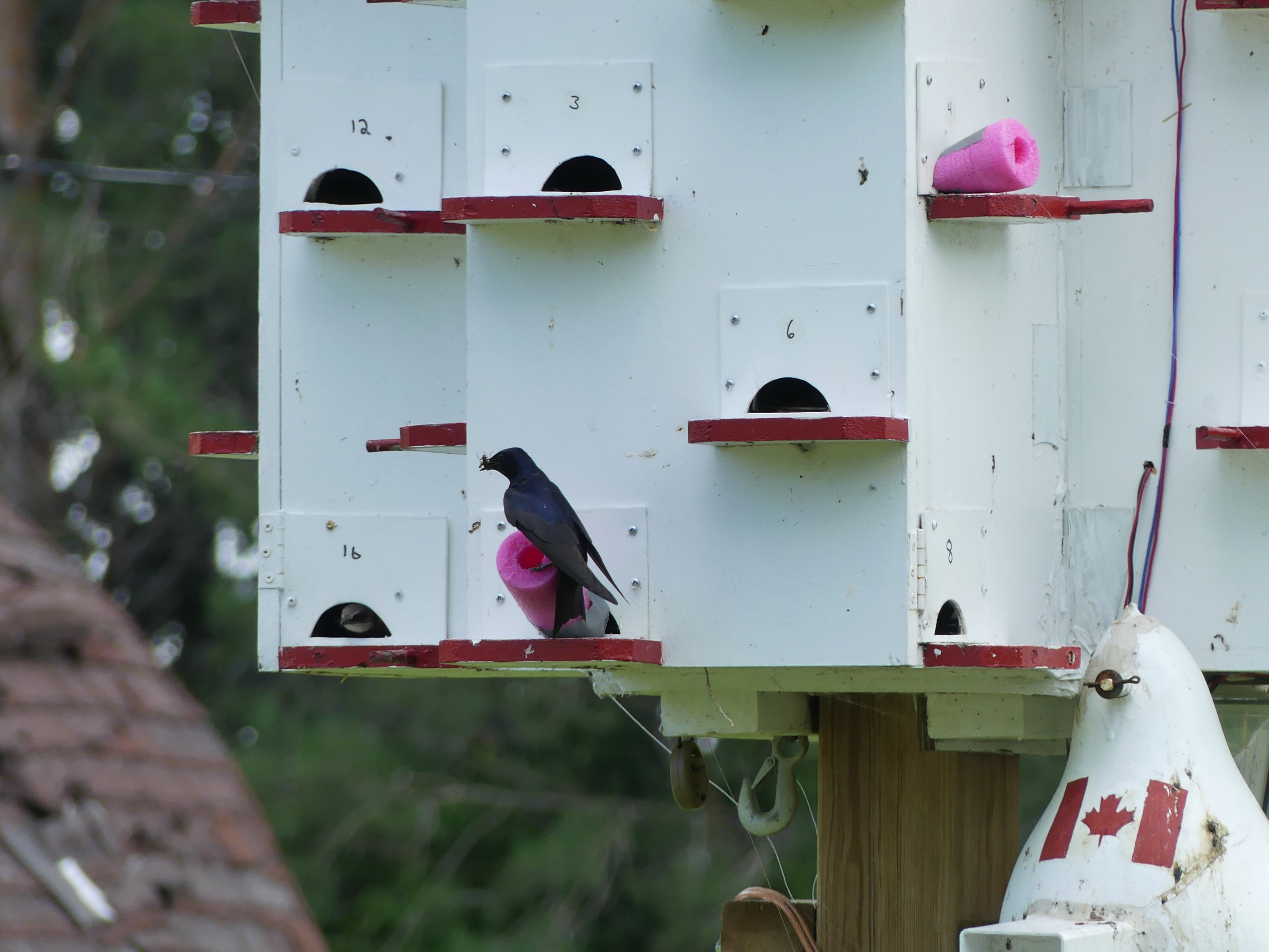
pool noodles to avoid premature fledgling 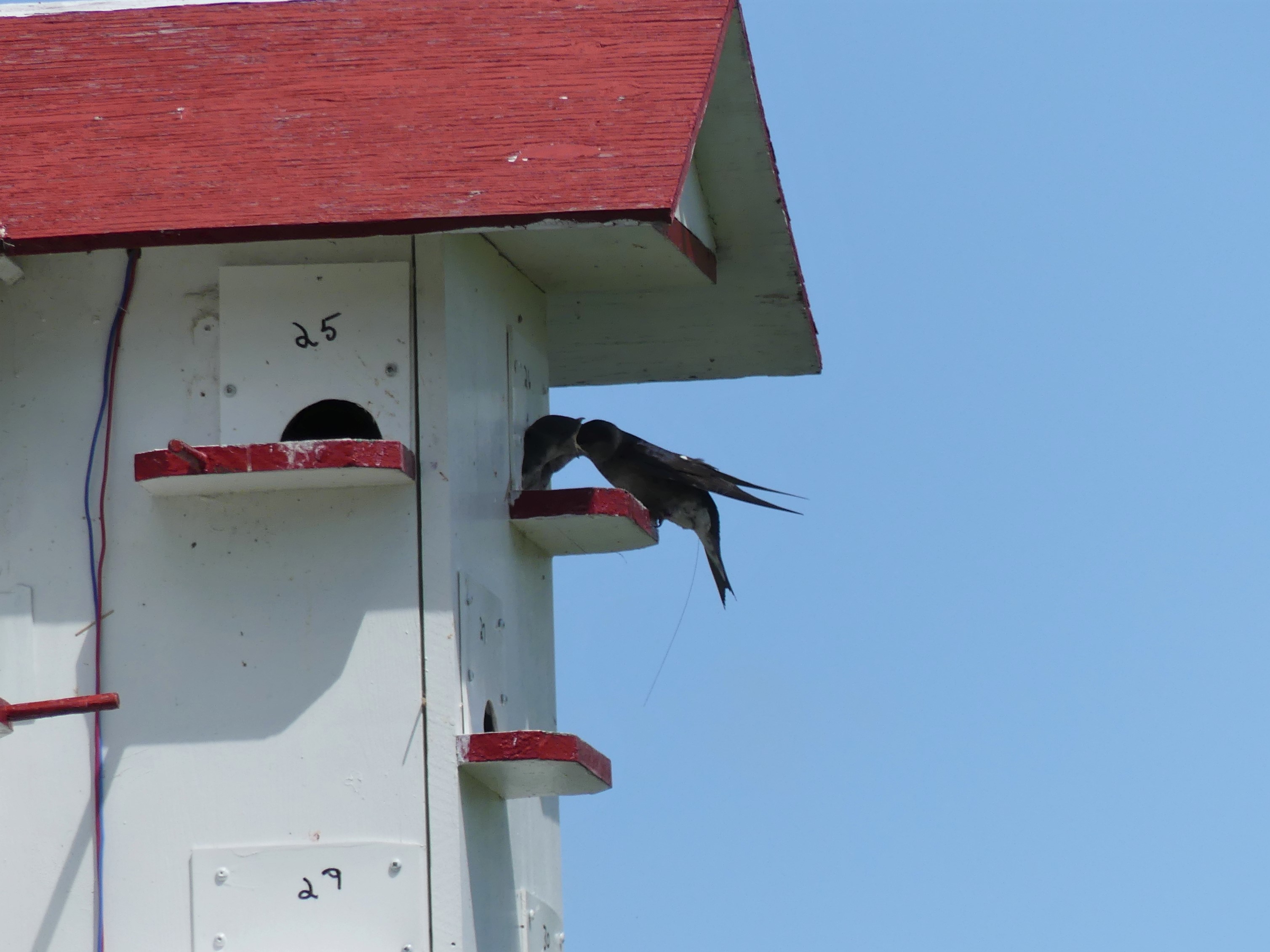
almost-fledgling fed at entrance
As the nestlings get older, we start to see them poke their heads out of the entrance, waiting for their parents to feed them there. When they reach that stage, they are only a few days away from fledging!
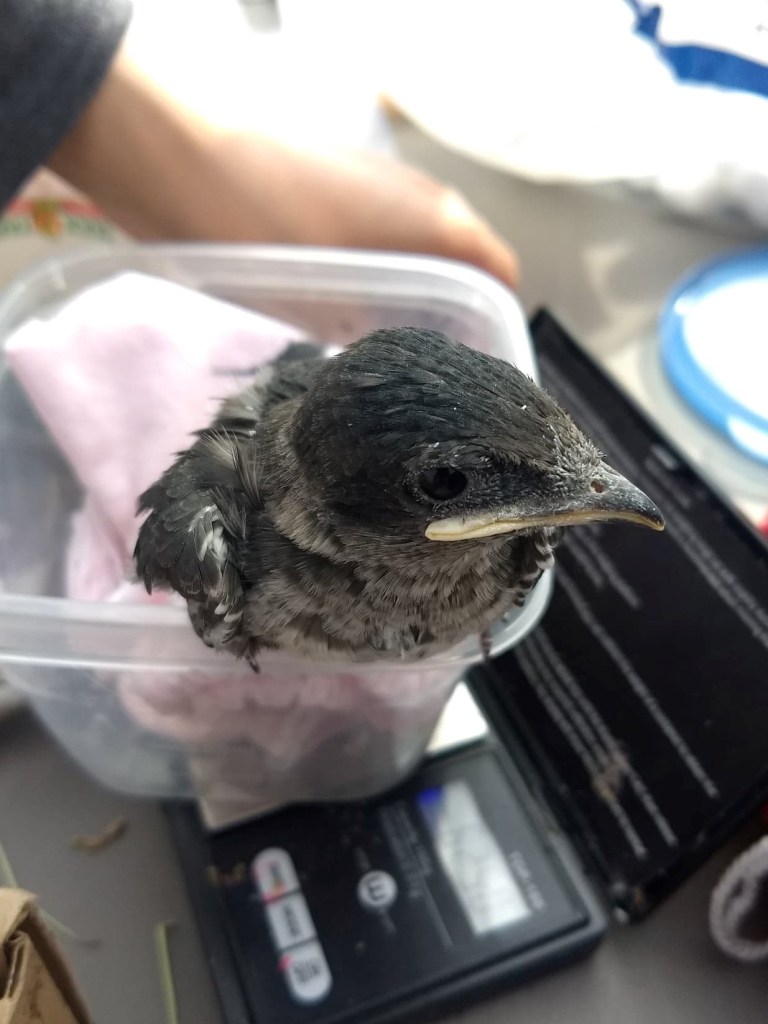
Nestling being weighed 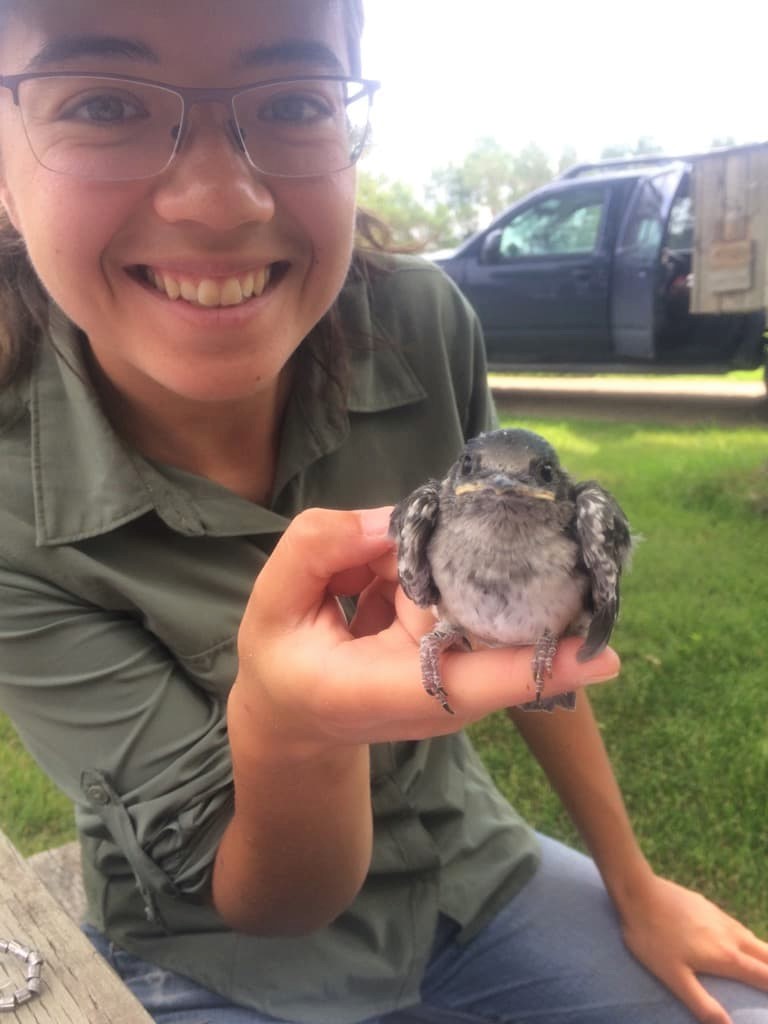
Me with a nestling Photo: K. Fraser
We still have another week of banding and tagging left, then the rest will just be checking for fledgling statuses. Fingers crossed that most of the make it successfully, and that we will see them again next year!
-Evelien
 eveliendegreef.com
This is an inspiring blog by a hard-working dedicated researcher.
LikeLike