Being a girl from California this may come as a surprise, but I actually don’t mind the winters in Winnipeg (this is currently my second winter here). Though some days are absolutely miserable with wind chills and temperatures below -20°C, most of the time the weather is tolerable and sometimes quite pleasant with sunny clear skies. The people here embrace the winter by doing activities like cross-country skiing, ice skating on the river, snow shoeing, tobogganing, ice fishing, even snow mazes! With appropriate winter gear, there’s still lots to do outside.
After a night of fresh snow, I love being the first to make prints on trails with Mocha.🐾 She is crazy for snow and will roll around making snow dog-angels, and stick her nose in fresh animal tracks. It takes an extra few minutes to put on winter gear each time before heading out the door, but the proper clothes make going out very manageable. Though not often, there are some miserably cold days, where breathing hurts your chest and you can feel your nostril hairs freeze when you inhale. One of the neat things about these colder days is the possibility of seeing sun dogs, an atmospheric phenomenon from the refraction of the sun’s light on ice crystals in the sky. It’s a type of halo around the sun, which I’ve only seen a handful of times here.
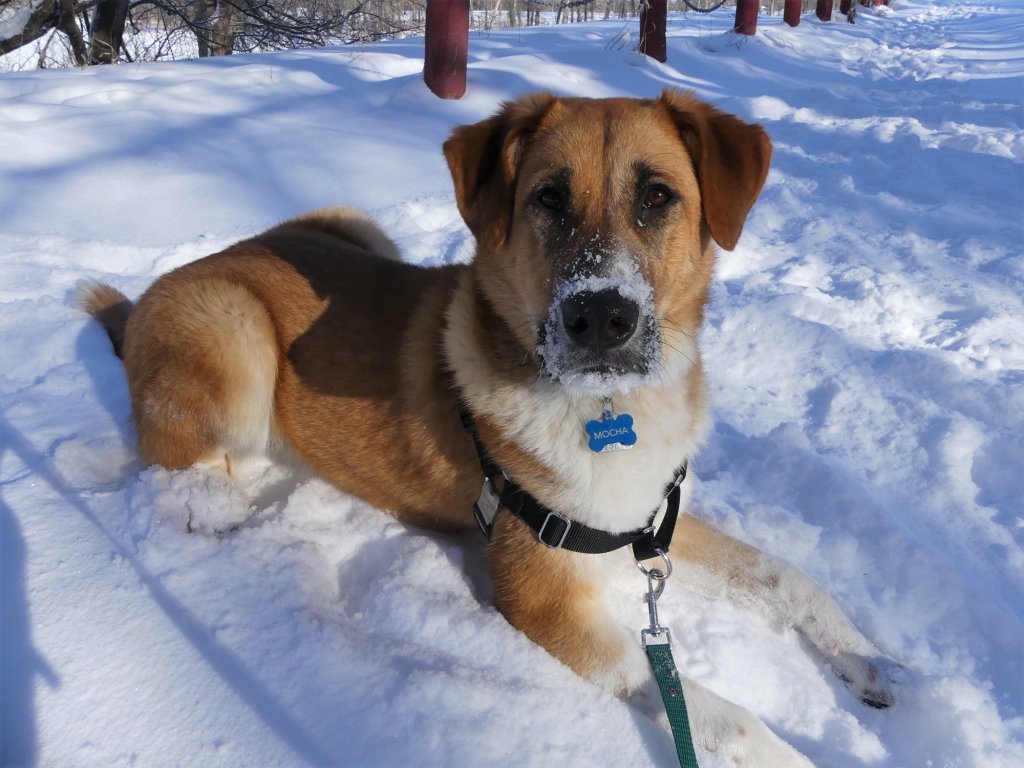
Mocha dog 
Sun dog
The first thing I was told when coming here in summer 2018 was to winterize my car by purchasing winter tires and installing an engine block heater. Driving here in winter is no joke! The winter tires help grip the snowy and icy roads, providing more traction to keep the car from slipping. The first few days of snowfall is when the roads are the most dangerous, I remember seeing a crashed car at almost every other intersection or road just on the way to school when we had our first snow storm. It’s important to switch summer and winter tires at the appropriate time – the general rule of thumb here is to transition tires when it hits 7°C. Even then, the car can still slip, so it’s always important to drive cautiously. When it reaches about -15°C, then it’s time to plug in the block heater when the car is parked. The block heater keeps the car engine warm during long periods of time so that the car will start when you need to use it. This device has a plug that sticks out of your car by the hood and can be plugged in with an extension cord. Many parking lots have sockets for this exact reason. And for any cars that have a yellow plug end, this means the owner had to replace the plug on their block heater because they accidentally broke it by driving off without unplugging it!
Matt and I drove my car once on Lake Manitoba, to go ice fishing with our good friend John. Since this was our first time doing this, we were advised to keep our seat belts off in case the ice broke. Though we knew the ice was safe enough, we followed through with the tip anyway. The fishing was unsuccessful that day, but I hear that people can get fish like walleye, pike, perch, and crappie. It’s a very popular activity here, seen by numerous tents on lakes and rivers that fishermen set up to shelter from the wind while they sit by their fishing hole.
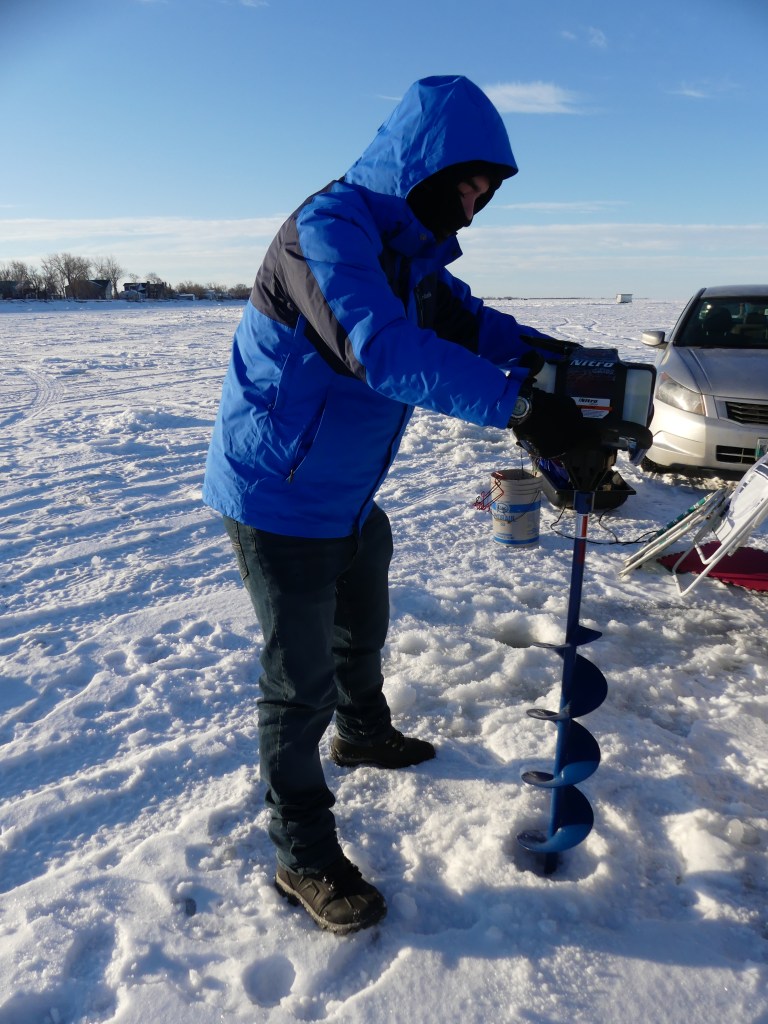
Matt drilling a hole in Lake Manitoba 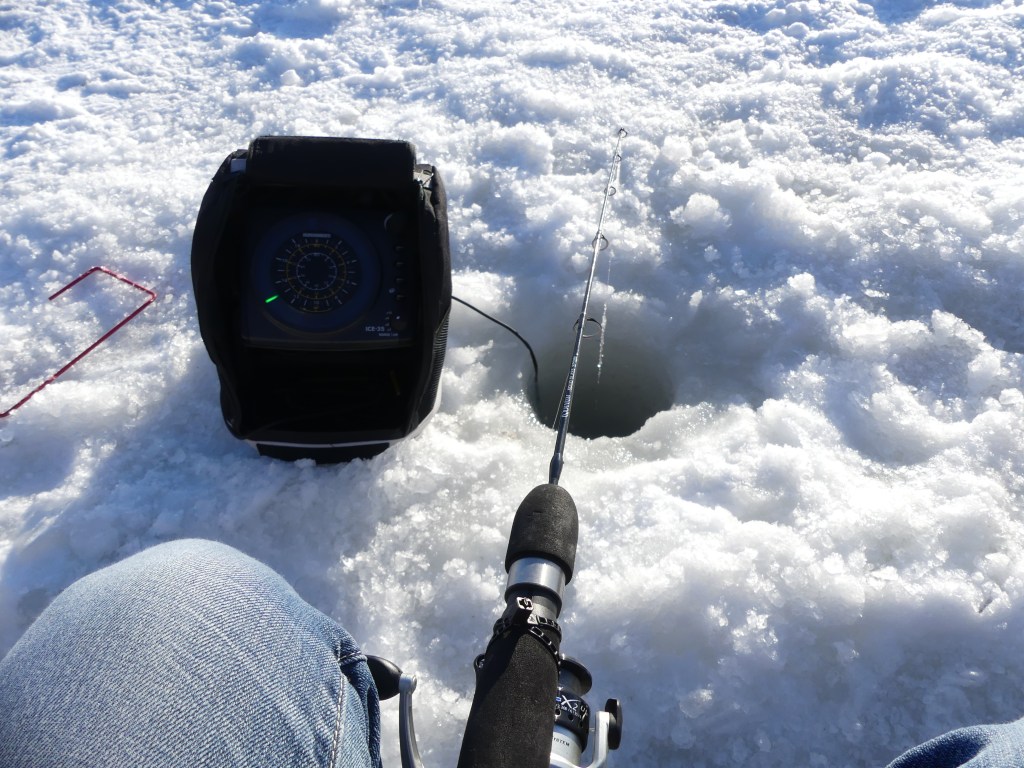
Ice fishing!
It amazes how these fish survive in frozen lakes. Since they’re cold blooded, they can match their body temperature with the environment, and as temperatures drop they reduce their metabolism to save energy. Birds (warm-blooded) can also lower their metabolism when they sleep at night (night-time hypothermia) to help conserve energy while keeping their body insulated by fluffing up their feathers. During the day they’ll stock up on foods to consume a large portion of their body weight. Bird feeders for supplemental food and nest boxes for shelter during the winter can really benefit them! It’s also a fun treat to hand-feed seeds, with birds coming right up and landing on you. Black-capped Chickadees in particular love to do this, and it’s a great way to connect people with nature.
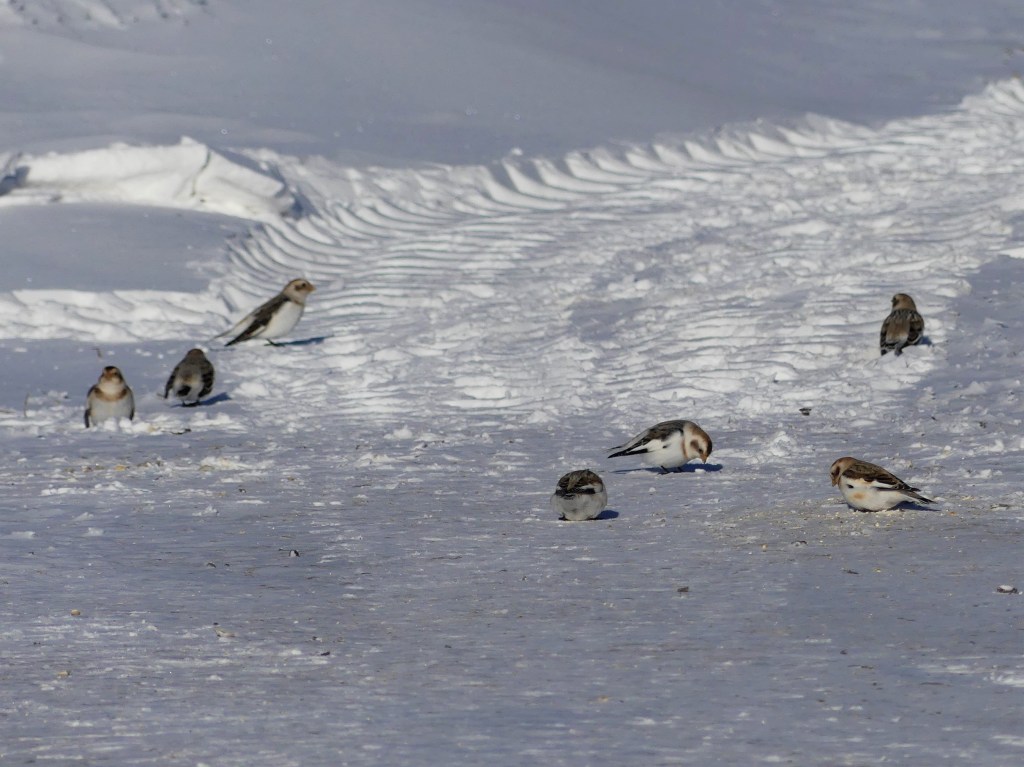
Snow Buntings 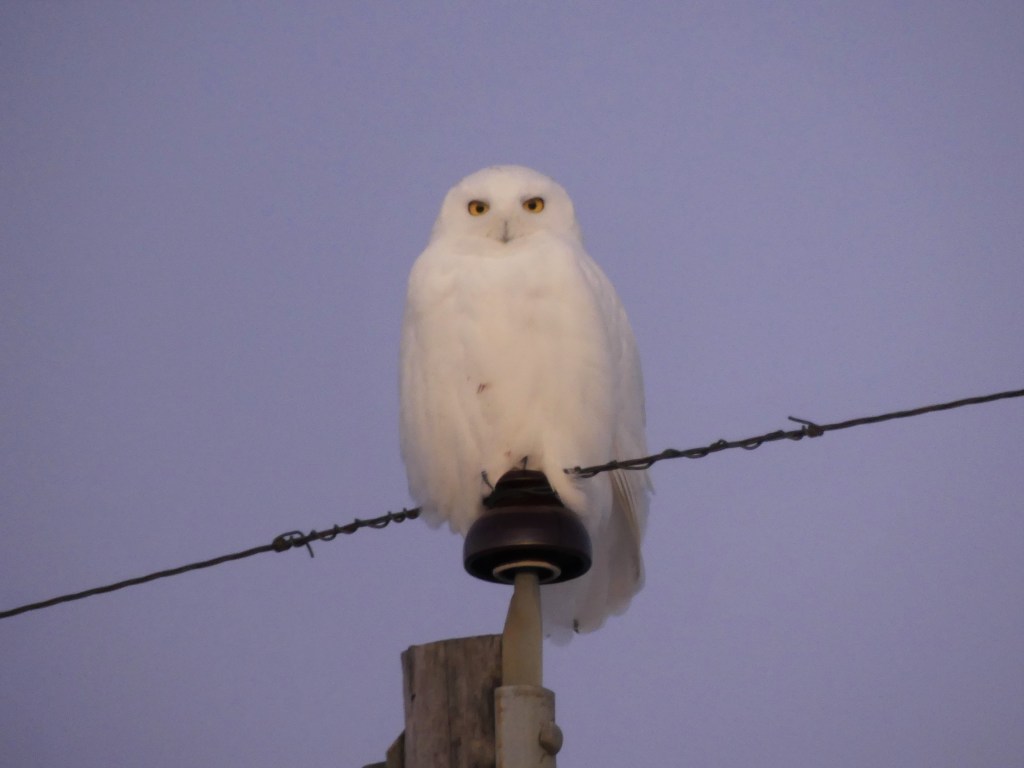
Snowy Owl 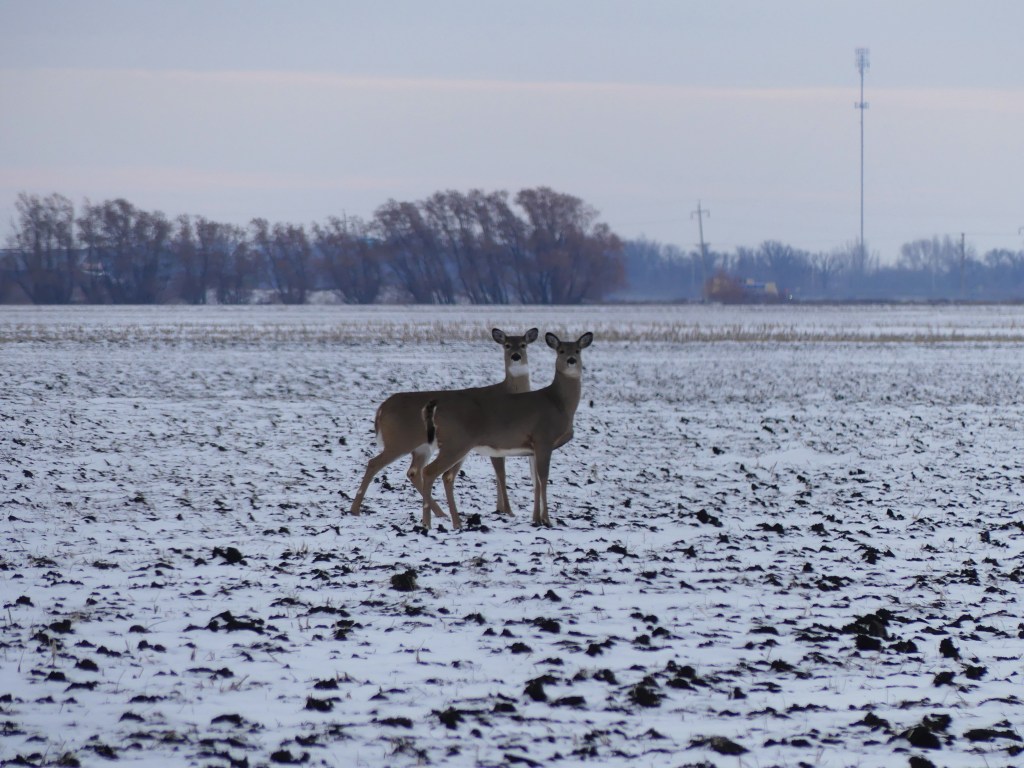
White-tailed Deer
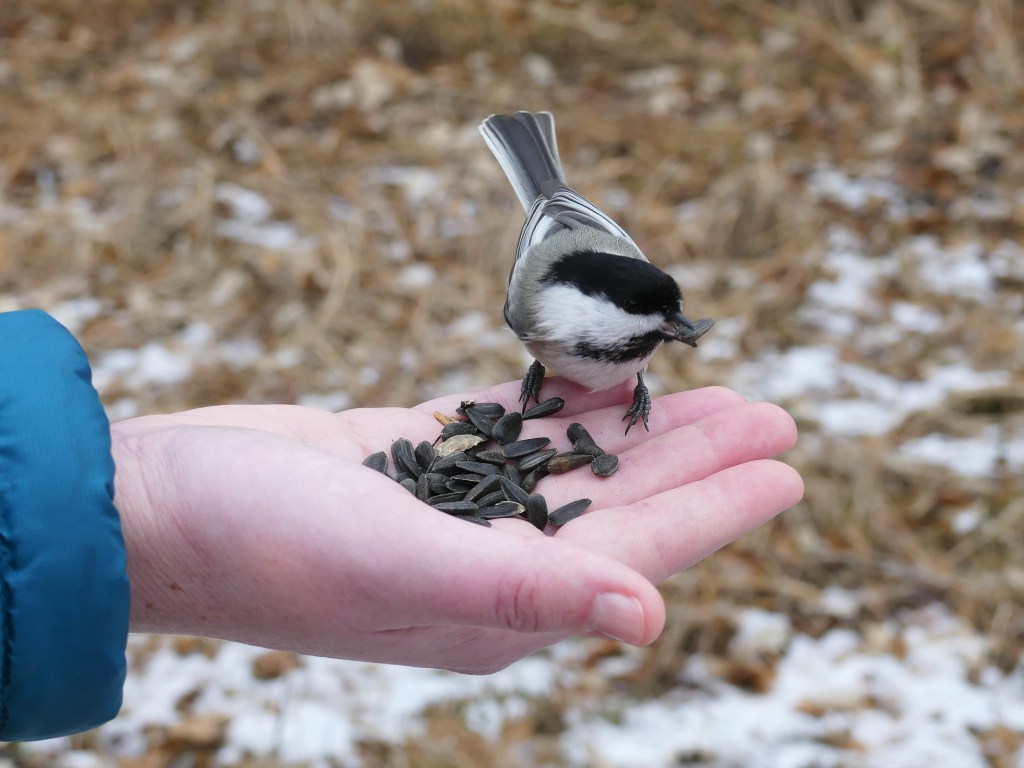
Hand feeding chickadees 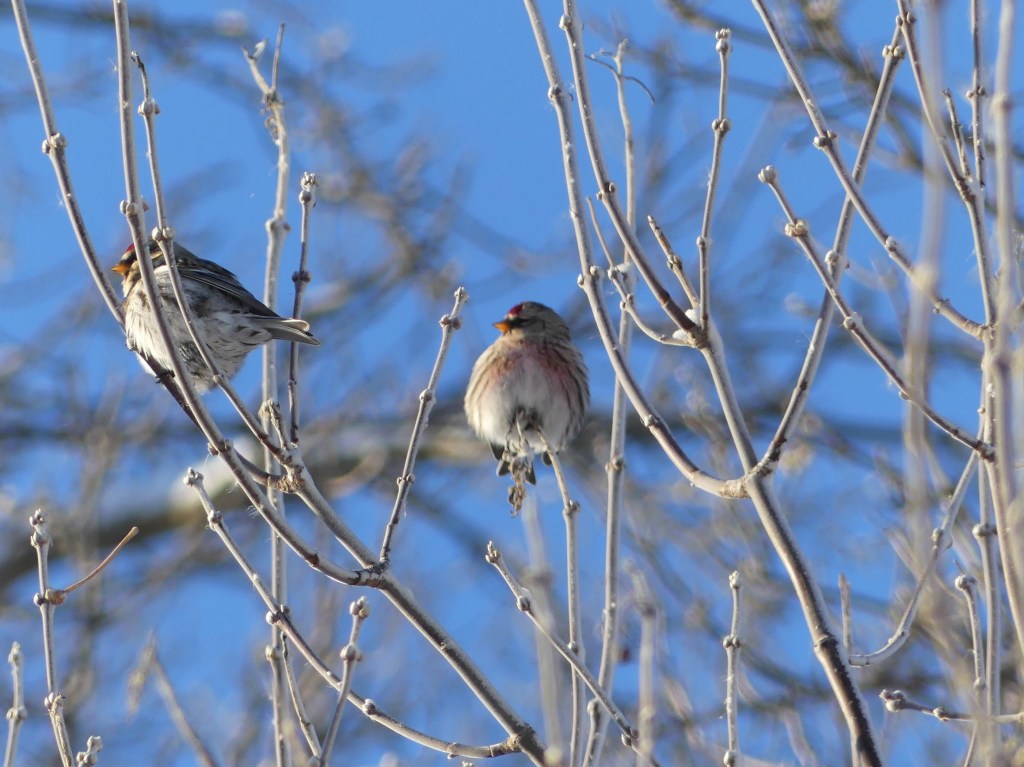
Common Redpolls
The quantity of birds here in the winter are significantly low compared to the spring and summer, and also compared to other areas on the continent. In my experience with Christmas Bird Counts in California, it would be no surprise for single group of people to get over 50 species on a good a day (even 60 or 70 in some areas), whereas here in Manitoba it’s amazing to get above 20! Of course in the spring and summer, the productivity here is booming and makes up for the wintertime calmness. I cannot deny that I prefer birding in the summer over the winter days, but I find the special winter birds to be incredibly beautiful and rather hard-core to brave the weather and even thrive in it. The Snowy Owls are a gem to see outside the city of Winnipeg, perched on power poles, hay bales, or just out in an open field. I love the flocks of Snow Buntings (I find them to be so cute!), and finches like the Pine Grosbeaks and Common Redpolls. A lifer bird for me this winter was the Bohemian Waxwing, a lovely bird that forms social flocks and eats berries together. With the remaining months of this winter and upcoming years, I still have birds on my list to see for the first time (hopeful for a Northern Hawk Owl!).
Cheers to a new year! May 2020 be filled love, success, happiness, and great birds.
-Evelien
 eveliendegreef.com